Quick answer: Water damage prevention works in layers. Maintain your plumbing, appliances, gutters, exterior drainage and sump system. Detect water early with leak sensors at high-risk spots, and consider whole-home flow monitoring for abnormal water use that a floor sensor may miss. Be able to contain the water, and have a plan for who responds when an alert arrives.
Water damage can start with a slow drip under a sink, a failing appliance hose, rain entering around the foundation, or a sump pump that cannot keep up with a storm. The sources differ, but the pattern is the same: the longer water goes unnoticed, the more it costs to put right.
A complete prevention plan therefore does more than detect water. It reduces the chance of a leak, watches the high-risk spots, limits how much water escapes, and helps you respond quickly.
This guide covers all four. You will find where water problems usually begin, which type of detection fits each risk, where to install sensors, and what to do when an alert arrives.
Disclosure: Water Pal, Pump Pal and Climate Pal are made by Johnson Creative LLC, the publisher of this guide. Product limits and alternatives are included so you can judge which type of protection fits your home.
What water damage prevention includes
Water damage prevention combines maintenance, detection, containment, and response. However, no single device covers every water source.
| Layer | Purpose | Examples |
|---|---|---|
| Prevent | Reduce the chance that water escapes or gets in | Repair worn connections, maintain appliances, clear gutters, correct drainage, protect pipes from freezing |
| Detect | Find water, or unusual water use, early | Point leak sensors, sensing cables, whole-home flow monitors |
| Contain | Limit how much water is released | Fixture shutoff valves, the main shutoff valve, automatic shutoff systems |
| Respond | Act before a small problem spreads | Text or email alerts, a named emergency contact, a drying plan |
Monitoring matters because even a well-maintained home can develop a leak. Still, a sensor supports maintenance rather than replacing it.
The cost of getting this wrong is well documented. Water damage and freezing is the second most frequent homeowners insurance claim after wind and hail, with an average claim of $15,400 for 2019 to 2023, according to the Insurance Information Institute, citing ISO data.
Water that stays in the home also creates the conditions for mold. The EPA says it is important to dry water-damaged areas and items within 24 to 48 hours to prevent mold growth.
Where water damage starts
Water reaches a home from plumbing, appliances, weather, groundwater or indoor moisture. The source matters, because each one calls for a different preventive step.
Plumbing fixtures and supply lines
Common leak points include sink faucets, drains and supply connections, toilet supply lines and seals, shower and tub plumbing, hose bibbs, and water treatment equipment.
In particular, look for damp cabinet floors, corrosion, mineral deposits, loose connections and unexplained changes in the water bill. The EPA suggests monitoring faucets “by listening for drips and looking under sinks for leaks at pipe connections, puddling, or other water spots” as part of routine home water maintenance.
Water heaters and appliances
Water heaters, washing machines, dishwashers and refrigerator water lines combine a water supply with parts that loosen, age or corrode.
The EPA recommends that you “visually inspect your water heater for leaks, aged gaskets or loose connections/screws, and corrosion.” In addition, follow each appliance manufacturer’s maintenance instructions, and have questionable components replaced by a qualified professional.
Basements, foundations and sump systems
Basements take water from foundation seepage, overwhelmed drainage, window wells, plumbing failures or an overflowing sump pit.
A floor sensor tells you when water has reached the basement. By contrast, a sump pump monitor warns you by watching the pump itself.
Monitoring may alert you when seepage, a drain backup or surface water reaches the sensor. However, it cannot correct the exterior, drainage or sewer condition that let the water in, so it does not replace drainage work, crack repair or sump maintenance.
For a full exterior and basement inspection, use the homeowner checklist to stop basement flooding. For seasonal preparation, see how to prevent basement flooding during summer storms.
Roofs, gutters and exterior drainage
Not every wet ceiling starts with a pipe. For example, damaged roofing, overflowing gutters, short downspouts, and soil sloping toward the house all direct rainwater into the building.
Inspect these after storms and each season. Water arriving from outside needs a roofing, drainage or foundation fix. An indoor sensor warns you about the result, but it cannot correct the cause.
Humidity and condensation
High indoor humidity can contribute to condensation on pipes, walls and windows, and lasting moisture feeds mold and rot.
The EPA recommends keeping indoor humidity below 60%, and ideally between 30% and 50%. A temperature and humidity monitor warns you when conditions move outside the range you set. Our guide to safe basement humidity levels covers how to measure and hold that range.
Freezing conditions
Pipes in exterior walls, crawl spaces and garages are vulnerable in freezing weather. Insulation, adequate heat and winterizing are the preventive steps. A temperature monitor gives early warning, but it cannot warm or repair a pipe.
What is a home water leak detection system?
A home water leak detection system uses point sensors, whole-home flow monitoring, or both to detect water where it shouldn’t be. Some systems only send an alert. Others can automatically close the main water valve.
The EPA draws the same line: some devices rely on “moisture detection, which alerts homeowners to unexpected dampness”, and others on “flow monitoring”, which watches water-use patterns for signs of a leak.
| System type | What it detects | Main advantage | Main limitation |
|---|---|---|---|
| Point moisture sensor | Water touching contacts or a probe | Affordable protection at a known risk point | Only detects water that reaches it |
| Sensing cable | Water anywhere along the cable | Covers a longer run or perimeter | Cable length and placement limit coverage |
| Whole-home flow monitor | Unusual flow patterns on the supply line | May identify abnormal flow from a concealed plumbing leak that never reaches a point sensor | Usually needs plumbing work. It may not locate the leak, and detection varies by system and leak rate |
| Automatic shutoff system | A leak or abnormal flow, depending on the system | Closes a valve, so it limits the water released | Costs more, and usually needs professional installation |
| Sump pump monitor | Pump activity and operating behavior | Warns about pump trouble before water reaches the floor | Does not detect leaks elsewhere |
| Humidity and temperature monitor | Readings outside your thresholds | Tracks damp and freeze-prone spaces | Does not detect liquid water at floor level |
Point sensors vs whole-home monitoring
A point sensor answers a local question: is there water in this exact spot? That suits the space under a sink, beside a water heater, or behind a washing machine.
A flow monitor answers a broader one: is water moving through the plumbing in an unusual way? Depending on the system, it may identify abnormal water use from a concealed leak that never reaches a floor sensor, and some pair with an automatic shutoff valve. Detection varies by system and by how fast the leak runs, and flow monitoring points to a problem rather than locating it.
The two are complementary rather than competing. Point sensors confirm water at chosen locations. Flow monitoring covers the plumbing as a whole. Neither replaces roof, foundation, drainage or sump maintenance.
Which type of leak detection do you need?
Choose based on the risk’s consequence and source.
| Situation | Start with | Consider adding |
|---|---|---|
| A known risk point, such as a water heater or washing machine | Point leak sensor | Automatic shutoff, or whole-home flow monitoring |
| Several sinks, toilets and appliances | Multiple point sensors | Whole-home flow monitor for broader coverage |
| Finished basement with a sump pump | Sump pump monitor plus a floor sensor | Backup pump or backup power |
| Vacation home or rental | Remote alerts at the critical points | Automatic shutoff, and a local emergency contact |
| Damp basement or crawl space | Humidity and temperature monitor | Dehumidification, and fixing the moisture source |
| Worry about pipes hidden in walls | Whole-home flow monitoring, which may flag abnormal use | Automatic shutoff, and a professional plumbing inspection |
If you are choosing between the two basement devices, read water leak sensor vs sump pump monitor. If you are comparing specific point sensors, use our WiFi water leak detector buying guide.
Where to install water leak detectors

Place point sensors where water will appear first, not where the device is easiest to see. The right spot depends on the floor slope, the appliance layout and the sensor design.
Under kitchen and bathroom sinks
Put the sensor or probe on the cabinet floor below the supply and drain connections. Keep stored items from blocking the path water would take.
Beside the water heater
Place it beside the base, or at the edge of the drain pan. Avoid spots where heat, normal condensation or service work could damage it, and follow both manufacturers’ instructions.
Behind the washing machine
Position it near the supply connections, at the lowest point behind or beside the machine. Make sure you can still reach it to test it without pulling on hoses or cords.
Near the dishwasher and refrigerator line
Use an accessible spot near the supply connection, or under the front edge where escaping water becomes visible. Do not block ventilation, moving parts or service access.
Behind toilets
Place it near the supply connection and the base, without creating a trip or cleaning hazard.
In the basement, near the sump pit
Put a sensor at a low point where overflow would travel. Remember that it only alerts once water arrives, so pair it with pump monitoring when you want earlier warning.
For signs that water may already be entering, see how to detect a basement water leak early.
In a crawl space or utility room
Choose spots near plumbing connections or HVAC condensate equipment. Check that the device is rated for the temperature and humidity there, and that WiFi reaches it reliably.
How to prevent water damage throughout the home
A sensor works best inside a maintenance routine. These seven steps are that routine.
1. Inspect visible plumbing and appliance connections
Look under sinks, behind toilets and around appliance connections a few times a year. Watch for moisture, staining, corrosion, mineral deposits, cracks and loose fittings. Repair active leaks promptly, and use a professional for concealed plumbing, water heaters or anything electrical.
2. Know how to stop the water
Find the main shutoff valve and the individual valves for sinks, toilets and appliances. Label the main one, and make sure everyone at home knows where it is and how it works.
Do not force a stuck or corroded valve. Ask a plumber to inspect or replace it. Before you shut the main off for a trip, confirm that nothing else depends on it, such as fire sprinklers, hydronic heating or a humidifier.
3. Watch your water use
An unexplained increase in the bill can signal a hidden leak. The EPA suggests you “compare your monthly water bill to the same month of the previous year,” and notes that a significantly higher bill “may indicate an unidentified leak.” A water meter check can confirm it, and our basement water leak guide walks through that test step by step.
4. Maintain the roof, gutters and drainage
Keep gutters and drains clear, extend downspouts away from the foundation, and look for places where water pools beside the house. Inspect roofing, flashing, window wells and visible foundation openings after severe weather.
5. Maintain the sump system
Test the pump as its manufacturer instructs. Check that the float moves freely, the discharge line is clear, and the water is carried away from the foundation. If your home floods often or loses power in storms, ask a qualified installer about a backup pump or backup power. For symptoms, see 5 sump pump failure signs and why a sump pump keeps running.
6. Control humidity and condensation
Ventilate where you can, fix the source of the moisture, and monitor damp spaces. A dehumidifier helps with indoor humidity, but it will not repair seepage, a leak or poor drainage.
7. Add detection where a leak would hurt most
Start where a leak would be hardest to notice or most damaging: an upstairs laundry room, a finished basement, a water heater above living space, or a property you leave empty. Then extend coverage to the remaining water connections, and test every device once it is installed.
How to build a home water monitoring system
Step 1: Map your risks room by room
Walk through the house and list every water source: sinks, toilets, tubs, showers, the water heater, washing machine, dishwasher, refrigerator, sump pit, HVAC condensate equipment and any water treatment system.
Then rate each one by consequence:
- High. Water would spread quickly, reach a finished area, or go unnoticed for hours.
- Medium. Water would likely be contained, or spotted during normal use.
- Low. The area is unfinished, checked often and easy to isolate.
Cover the high-consequence spots first.
Step 2: Match the device to the risk
Use a point sensor where escaping water collects in a predictable place. Use a sump pump monitor to watch pump behavior. Consider flow monitoring when you want coverage beyond fixed sensor locations, and an automatic shutoff when limiting the water released matters most.
Step 3: Check power, signal and alert delivery
Test WiFi at the actual install spot. Basements, cabinets and utility rooms are often weaker than the hallway outside them.
Connect the device, turn on every alert channel it offers, and test the whole path from detection to notification. A sensor isn’t finished until the right person receives the alert.
For Water Pal, follow the Water Pal setup guide. If an unresponsive router keeps knocking devices offline, an automatic router rebooter restarts the router or modem when the connection drops. It cannot fix an outage at your internet provider.
Step 4: Decide who responds
Agree who acts if an alert arrives while the house is empty. Save the numbers for a nearby contact, a plumber and your insurer. Keep the main shutoff accessible and labeled.
Retest after anything changes: a new router, a new WiFi password, a moved sensor or a battery replacement.
Why sump pump monitoring is different
A floor sensor near the pit reports water after it arrives. A sump pump monitor watches how the pump is working, so it can flag trouble earlier in that sequence.
Some monitors use floats or water-level sensors in the pit. An electrical load monitor works differently: the pump plugs into the monitor, the monitor plugs into the outlet, and it reads changes in the pump’s power use. No sensor goes in the pit.
Pump monitoring has limits. It does not supply backup power, clear a blocked discharge line, replace a failed pump, or detect every source of basement water. A floor sensor still earns its place, because not every basement leak starts at the sump.
For setup, see how to set up a sump pump monitoring system.

What to look for in a WiFi water leak sensor
| Feature | Why it matters | Question to ask |
|---|---|---|
| Sensing method | Contacts, a probe or a cable decide where water must reach | Will it sit on the path water will actually take? |
| Alerts | Text, email, app and siren reach people differently | Which alerts are included, and who receives them? |
| Ongoing cost | Some features sit behind a plan | Are basic alerts free? What needs a subscription? |
| Power | Battery and plug-in devices fail differently | Does it warn you about a low battery or lost connection? |
| Connectivity | Remote alerts need a working path out | Does WiFi reach the install spot? |
| Local warning | A siren alerts someone in the building when the internet is down | Does it sound locally, alert remotely, or both? |
| Testing | Sensors have to stay reachable and working | How often should it be tested or cleaned? |
| Shutoff | Detection and containment are separate jobs | Does it only alert, or can it control a valve? |
For a product-level comparison, use the best WiFi water leak detectors guide.
Water Pal and Pump Pal
Johnson Creative makes two devices that cover different parts of a monitoring plan.
| Water Pal | Pump Pal | |
|---|---|---|
| Job | Detect water reaching a probe | Monitor pump operating behavior |
| Best fit | Known leak points: water heaters, sinks, appliances | Sump, well, utility and other compatible pumps |
| Method | Two-prong probe on a wired sensor | Electrical load monitoring |
| Setup | Two AAA batteries, WiFi, mounts on a wall or surface | Plugs into a standard outlet, and the pump plugs into it |
| Alerts | SMS, email or both | SMS or email |
| Listed price, checked September 2026 | $49.99 | $74.99 |
Water Pal
Water Pal is a WiFi water leak detector made by Johnson Creative LLC. It uses a two-prong probe on a wired sensor and sends SMS or email alerts when it detects water.
Water Pal runs on two AAA batteries and joins your existing WiFi. The unit mounts above floor level while the wired probe reaches the detection point. According to the product page, basic SMS and email alerts need no monthly subscription, and optional Premium Cloud Services add further features.
Water Pal is a point sensor. It does not monitor flow through the plumbing or close a valve.
Pump Pal
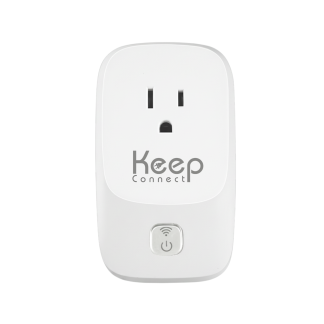
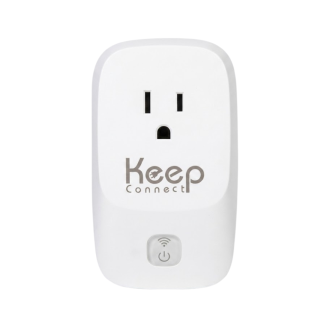
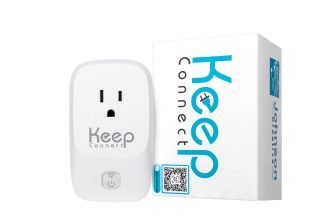
Pump Pal, sold as Keep Connect | Pump Pal, is a WiFi pump monitor made by Johnson Creative LLC. It analyzes electrical load data to spot abnormal pump behavior, then sends an SMS or email alert.
Pump Pal plugs into a standard outlet, and the pump plugs into the monitor. According to the product page, it works with standard three-prong pumps up to 1 HP and most 120V pumps, and it detects conditions including dry run, overload, stuck floats, clogs, air lock and blocked discharge lines, with no sensor in the pit.
Pump Pal is a monitor, not a backup pump or a repair. In other words, it does not keep the pump running during a power outage, and it does not correct the condition behind an alert.
What these devices can and cannot do
| They can | They cannot |
|---|---|
| Water Pal can alert you when water reaches its probe | Detect a leak that never reaches the probe, or close a water valve |
| Pump Pal can watch a compatible pump's electrical load patterns | Supply backup power, repair the pump, or detect unrelated plumbing leaks |
| Both can send remote alerts on their published channels, when power, WiFi and internet service are working | Guarantee connectivity, or catch every possible problem |
| Both can help someone respond sooner | Replace plumbing, drainage, pump maintenance or a professional inspection |
| Both add a monitoring layer to a prevention plan | Stop water getting into the home |
Climate Pal for damp or cold spaces
Where humidity or temperature is the concern, Climate Pal sends SMS or email alerts when readings move outside the thresholds you set.
Warning signs of hidden water damage
Sensors catch new problems. By contrast, these clues point to water that is already there.
Inside the home
- Stains or discoloration on ceilings and walls
- Bubbling, peeling or blistered paint
- Warped, soft or cupped flooring
- Damp cabinet bases
- Corrosion or mineral deposits at connections
- A musty smell that does not clear
- An unexplained rise in water use
In the basement or crawl space
- Damp patches or water lines on walls and floors
- White mineral deposits on masonry
- Condensation on pipes or windows
- Rust on shelving or equipment
- Puddles that return after rain
- Humidity that stays above your target range
Around the sump pump
- A pump that does not start as water rises
- A pump that runs constantly
- Grinding, rattling or unusual vibration
- Water flowing back into the pit after the pump stops
- A blocked, frozen or disconnected discharge line
Several of these have more than one possible cause. If the source isn’t obvious, avoid covering or refinishing the area until you find it.
What to do when a water sensor alerts you
- Deal with electrical hazards first. Do not step into standing water near outlets, cords or appliances. Cut power only from a dry, safe position. If you cannot, call an electrician or emergency services.
- Find the source, without taking risks. Check the monitored spot and the plumbing or appliance beside it.
- Stop the water if it is safe. Use the fixture valve, or the main shutoff. Do not force a damaged valve.
- Call the right trade. That may be a plumber, an appliance technician, an electrician, a roofer, a drainage contractor or a restoration specialist.
- Remove the water and start drying. The EPA advises drying water-damaged areas within 24 to 48 hours to prevent mold growth.
- Document it. Photograph the damage and keep repair records in case you claim.
- Test the sensor again. Make sure it is dry, back in position and able to send the next alert.
Frequently Asked Questions
What is the best way to prevent water damage at home?
Use layers. Maintain the plumbing, appliances, roof, drainage and sump system. Add leak detection at the highest-risk points. Know how to shut the water off, and agree who responds to an alert. A sensor finds the problem, but it does not prevent or repair it.
What is the difference between a water sensor and a whole-home leak detection system?
A point sensor detects moisture at one spot. A whole-home system monitors flow or pressure on the main supply line, and it may identify abnormal water use from a concealed leak. Some systems can also close an automatic shutoff valve. Detection depends on the system, and on the rate and pattern of the leak.
Does a water leak detector stop the water?
Usually not. Many point sensors only send an alert. Shutting the water off automatically needs a compatible valve, or a system built for that job. Either way, make sure everyone at home knows where the main shutoff valve is.
How many leak sensors does a house need?
There is no fixed number. Count your water sources, then prioritize the places where a leak would be hidden or expensive. Common starting points are the water heater, washing machine, sump area, sinks, toilets, dishwasher and refrigerator line.
Where should I place a water leak sensor?
At the lowest reachable point where water from that connection or appliance would collect. Follow the manufacturer's placement instructions, and test the sensor once it is in its final position.
How can I protect my home while I am away?
Test the alerts before you leave, replace weak batteries, check visible plumbing, and give a nearby contact a key. Consider flow monitoring or automatic shutoff if the house sits empty often. Before shutting off the main supply, confirm nothing else depends on it, such as fire sprinklers, hydronic heating or a humidifier.
How do I know if my sump pump is failing?
Warning signs include unusual noise, failing to start, running constantly, visible corrosion, slow water removal, or water returning to the pit. A pump monitor can also flag abnormal operating patterns. See the full guide to sump pump failure signs.
How much water can household leaks waste?
According to EPA WaterSense, the average household's leaks can account for more than 9,300 gallons of water wasted every year.
Can a WiFi leak detector work during an internet outage?
Remote text, email and app alerts need working power, network equipment and internet service. A device with a local siren can still sound on site, depending on its design. Check the product documentation for what each model does offline.
Build protection in layers
Water damage prevention starts long before a sensor sounds. Maintain the systems that carry water, keep rain away from the house, monitor the places where a problem would go unseen, and be ready to act when an alert arrives.
For point-of-leak monitoring, Water Pal sends SMS or email alerts when water reaches its wired probe. For compatible pumps, Pump Pal watches electrical load patterns and alerts you to abnormal behavior. Neither replaces maintenance, repairs or an automatic shutoff, and each adds a layer of warning.
Water Pal watches a leak point. Pump Pal watches a compatible pump. They cover different risks.