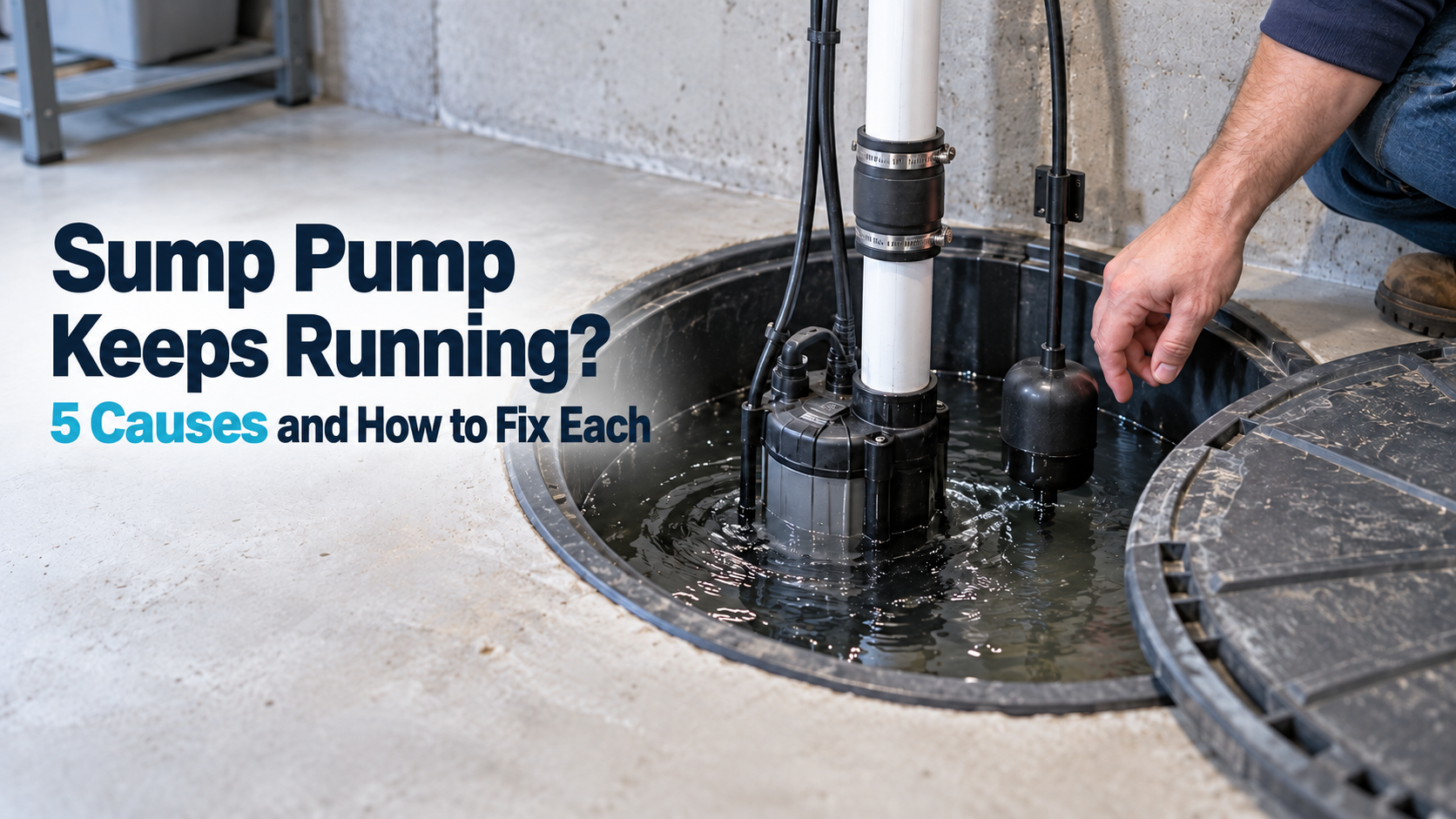
Your sump pump is supposed to run, just not all the time. If it has been running nonstop for hours, something is wrong, and the fix depends on which of the 5 common causes is to blame.
Why does my sump pump keep running? A sump pump that runs nonstop usually has a stuck or faulty float switch, a failed check valve letting water flow back into the pit, a high water table, an undersized pump or a failing motor. If it runs for more than 20 to 30 minutes with no rain, check the float switch first.
The sooner you figure out what’s causing the problem, the better your chances of avoiding a pump burnout, basement flooding, or an expensive emergency repair.
Table Of Contents
What Does It Mean When a Sump Pump Runs Constantly?
The job of a sump pump is simple: it collects water in the sump pit and pumps it away from your foundation before it can flood your basement or crawlspace.
It’s common for a sump pump to run more frequently when it is raining heavily, snow is melting, or groundwater is high. But if the pump is running continuously or running for a long time without shutting off, that usually means something is wrong.
You shouldn’t ignore a sump pump that runs all the time. This means there is too much water going to the pump, the pump is not pumping the water out correctly, or it is not getting the correct signal to turn off.
Normal pump cycles vs. abnormal continuous running
A typical sump pump cycle usually goes like this:
- Water flows into the sump pit.
- Rising water lifts the float switch.
- The pump turns on
- Water is pushed out through the discharge pipe.
- As the level drops, the float falls.
- The pump switches off.
That cycle can repeat many times during a storm, but the pump should still shut off between cycles.
Abnormal continuous running has a different look. The pump can continue to operate when the pit is substantially empty. It can cycle, turn off for a bit, and turn back on. Or it tries to pump water but never lowers the pit enough to stop.
One of the early signs of a sump pump failure is that kind of pattern.
When to be concerned (more than 20-30 minutes with no rain)
It’s not necessarily abnormal if your sump pump runs for 20 to 30 minutes during heavy rain. The pump may only be able to match the rate of water entering the pit.
But if your sump pump is running for more than 20 to 30 minutes and there hasn’t been a recent rain or snow melt or any obvious source of water, it’s time to investigate.
Also be concerned if:
- The pump is constantly running.
- Every few minutes, the pump comes on.
- The pit never looks empty.
- The pump is humming but not pumping.
- After each cycle, the water is returned to the pit.
- The pump is noisy or warm.
- The pump keeps running even when the pit is almost dry.
A sump pump that runs too long may still be working today but if the cause is not fixed it may not last.
5 Reasons Your Sump Pump Is Running All the Time
There are 5 reasons a sump pump will continuously run. Some are easy fixes. Others might need a plumber, drainage expert, or a pump replacement.
1. Stuck or faulty float switch
The float switch is what signals the sump pump when to turn on and off.
The water rising in the pit carries the float upward, which activates the pump. When the water level gets low, the float drops and tells the pump to turn off.
If your float gets stuck in the “on” position, the pump may keep running even when the water level is already low.
This can occur when:
- The float may get caught against the pit wall.
- The pump cord may trap the float.
- Debris may block the float from moving freely.
- The float switch may be worn out.
- The pump was going in the pit.
This is one of the easiest causes to look for. Look into the pit. Check the float. Make sure it moves freely. If the pump turns off when you gently lower the float, the float position or the float switch has failed.
Never touch standing water around electrical equipment unless the power is safely turned off.
2. Pipe check valve failure — water flowing back into the pit
A check valve is installed on the discharge pipe to prevent the pumped water from flowing back into the sump pit.
When the pump is on, it pumps the water out of the pipe. When you turn off the pump, the check valve should close so water won’t flow back.
If the check valve fails, water that has just been pumped out can fall back into the pit. The water level rises again, the float switch activates again, and the pump goes through another cycle.
That leads to a frustrating cycle:
- The pump starts.
- Water leaves the pit.
- The pump stops.
- Water flows back into the hole.
- Pump kicks back in.
If your sump pump is running every few minutes, or you can hear water rushing back after the pump shuts off, the check valve may be the problem.
When a check valve fails, it can make a working pump look like it is struggling. The problem here is that the same water keeps coming back.
3. High groundwater table or drainage issue near the foundation
Sometimes the sump pump runs all the time because water is entering the pit non-stop.
This can happen during:
- Strong rain
- Fast snowmelt
- Wet soil
- Groundwater is at a high level
- Yard not graded very well
- Gutters clogged
- Downspouts draining too near the foundation
- Foundation drainage issues
In this case, the pump is probably doing what it should. The real problem is that too much water is flowing into the sump pit.
Begin away from the house. Keep gutters clean and ensure downspouts direct water away from the foundation. Be sure the earth slopes away from the house, not toward it.
If the pump is running all the time during wet seasons, you may have a high water table or drainage problem in your home that needs a more permanent fix.
4. Undersized pump for the volume of water
The sump pump should be powerful enough for the volume of water that flows into the pit.
If the pump is too small, it may run constantly because it can’t remove water fast enough. It can still pump water, but not fast enough to keep up with the inflow.”
This can make the pump work harder, run longer, and wear out faster.
Symptoms of a pump that is too small are:
- Even with the pump operating, the water level is still high.
- When it is raining, the pump rarely turns off.
- The pit fills faster than the pump can take it out.
- The pump appears to work, but it can’t keep up.
- The pump runs for long periods of time after storms.
An undersized pump is more than a nuisance. If a stronger storm hits, the pump could become overwhelmed, and water could start to rise into the basement.
If you think the pump is undersized, a plumber can help you determine the correct capacity based on the pit, discharge height, and water volume.
5. Pump motor beginning to fail
A sump pump motor can get weak over time.
As the motor wears out, the pump may have to run longer to move the same amount of water. It might sound louder, vibrate more, overheat, or not move water well.
Symptoms of a weak motor, in the context of a pump that runs too long:
- Longer runtimes to move the same amount of water.
- Less water movement per cycle
- Overheating during extended runs
- The pump not shutting off normally
A failing motor can also produce symptoms you would notice when the pump isn’t running properly, including grinding noises, burning odors, and unreliable starting. Those are covered in sump pump not working.
The pump motor may still run if it is starting to fail, but that doesn’t mean it’s safe to depend on. A motor that runs constantly can burn out when you need it most.
That’s one reason a sump pump monitor comes in handy. It may help detect abnormal behavior before the pump fails in a storm.
How to Diagnose the Problem Without Calling a Plumber
You don’t have to be a plumber to do a basic check. These steps can help you identify the likely cause before you call a professional.
Safety note: Sump pumps mix water and electricity. If you’re unsure if the area is flooded or if you see unsafe wiring, stop and call a professional.
1. Manually lift the float switch and listen
The float switch is located in the sump pit.
If it is safe to do so, gently work the float up and down. You are checking the pump for normal operation.
If the pump turns on when the float goes up and off when it goes down, the switch may be working. A float that is stuck, tangled or blocked needs to be moved so it can travel freely.
When the pump keeps running with the float down, the cause could be a bad switch or an electrical problem with the pump.
Also, listen to the pump. A normal pump will be steady-sounding. Grinding, buzzing, humming, or rattling are indications of mechanical trouble.
2. Check the discharge pipe for backflow
Once the pump shuts off, listen for water flowing back into the sump pit.
There may be a little water left in the pipe, but a big whoosh of water going back into the pit can indicate a failed or missing check valve.
Watch the water level, too. Backflow may be the issue if the water level drops when the pump is running and rises rapidly when it is off.
Installing a check valve is usually cheaper than replacing the whole pump, but it has to be installed properly and in the correct direction.
3. Check the pit for abnormal water volume
See how fast the water is coming into the sump pit.
If it flows all the time, maybe the pump isn’t the real problem. The problem could be heavy groundwater, poor drainage, clogged gutters, or diverting water toward your foundation.
Look out of the house:
• Are the gutters clogged?
• Are downspouts too close to the foundation?
• The yard slopes up to the house?
• Is water collecting around the basement walls?
• Did the problem start after a lot of rain or snow melt?
If the pit continues to fill even in dry weather, you may have a groundwater or drainage problem that needs professional attention.
What Happens If You Ignore a Continuously Running Sump Pump
A 24/7 sump pump isn’t just an inconvenience. It can cost you.
The biggest risk is motor burnout. Sump pumps are designed to run intermittently. If it runs continuously, the motor may overheat, wear out sooner, and even fail.
Depending on the pump and warranty terms, warranty issues can also arise if the pump is operated continuously or not installed correctly. If the pump burns out due to a stuck switch, failed valve, or dry running, the manufacturer may not view that in the same light as a normal defect.
The most serious danger is flooding.
If the pump has been running for too long, it may be near failure. If it fails during the next storm, water can rise quickly into the basement or crawl space.
Ignoring the problem can cause:
- Burned-out pump motor
- Shorter pump life
- Increased repair costs
- Warranty problems
- Basement Flooding
- Damage to the drywall and flooring
- Risk of mould and mildew
- Damaged stored belongings
A pump that is always running is a warning. It is better to diagnose it early than to find out when water is already inside the house. For the bigger picture, see our guide to preventing water damage at home.
How a Sump Pump Monitor Can Detect This Before It Becomes a Problem
Most homeowners don’t stand by the sump pump all day listening to every cycle.
That’s the problem.
A pump can begin to cycle too often, cycle too long, or fail to cycle normally for a long time before anyone notices. By the time you hear the pump, it could already be stressed.
A sump pump monitor helps by monitoring behavior and alerting you when something abnormal happens.
How Pump Pal detects abnormal run duration and cycle frequency
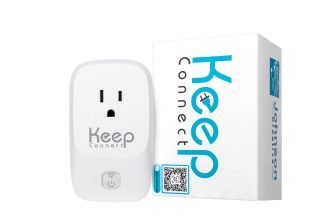
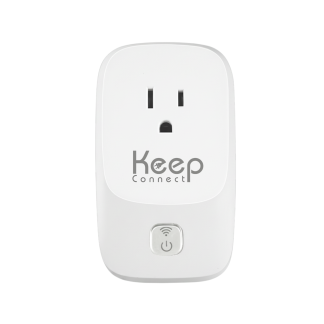
Pump Pal monitors your pump’s activity and alerts you if it starts running outside its normal pattern.
It works by analyzing the pump’s electrical load, run time and cycling behavior before the basement gets wet. That means no external sensors, float switches or complex installation.
You can get alerts for problems such as:
- Extended pump run times
- Overcycling of pumps
- Potential stuck float switch
- Dry Run Conditions
- Overload Behavior.
- Clogged discharge lines or blockages
- Incorrect pumping patterns
- Early signs that the pump may not be moving water correctly
That’s the benefit of smart pump monitoring. It gives you a chance to fix a sump pump issue before the pump fails.
What to Check When Pump Pal Sends an Alert
A pump that runs every few minutes points to backflow, a bad check valve, or drainage problems. When it runs too long, check the float switch, the water level, the discharge line, and the pump itself. A sudden change in behavior is another warning sign, and Pump Pal can alert you to it before the next heavy rain.
Pump Pal does not replace the pump itself. It allows you to see what the pump is doing, how often it is running, and when it might need attention.
That visibility for homeowners, rental properties, basements, crawl spaces, and remote homes can mean the difference between a basic maintenance check and a costly flood cleanup.
Don’t wonder what your sump pump is doing. Keep Connect’s Pump Pal monitors pump operation and sends an SMS or email alert if it detects abnormal operation.
How to set up Pump Pal
It’s easy to set up. Plug Pump Pal into a standard wall outlet, connect it to Wi-Fi, and plug your pump into Pump Pal. Within minutes, it self-calibrates and starts monitoring pump activity.
Read: How to Install a Sump Pump Monitoring System in Full to learn how to install it fully.
If your pump makes unusual noises, starts unreliably, or will not turn on at all, here is what to do when your sump pump is not working.
To learn more about water protection, read the Water Leak Detection Guide and the Pump Pal product page.
Frequently Asked Questions
Is it normal for sump pump to run every 5 minutes?
It can be normal during heavy rain, rapid snowmelt, or high groundwater conditions. But if your sump pump runs every 5 minutes during dry weather, that may indicate a stuck float switch, check valve failure, drainage issue, or water flowing back into the pit.
What happens when sump pump runs dry?
A sump pump that runs dry can overheat and wear out faster because it is operating without water to move. Dry running may damage the pump motor or internal components, especially if it happens repeatedly or for long periods.
Can a sump pump burn out from running too long?
Yes. A sump pump can burn out if it runs continuously for too long. The motor may overheat, wear down, or fail completely. If your sump pump is running nonstop, inspect the float switch, check valve, discharge pipe, and water level as soon as possible.
Why won't my sump pump shut off?
A sump pump that won't shut off usually has a float switch stuck in the up position, a failed check valve letting water flow back into the pit, or more water coming in than the pump can remove. Check that the float moves freely first, then check the check valve.
Why is my sump pump running when it hasn't rained?
Water is still reaching the pit from somewhere. Common causes are a high water table, snowmelt, irrigation near the foundation, or a failed check valve sending the same water back into the pit. A stuck float switch can also keep the pump running with little water in the pit.
Does a sump pump monitor work during a power outage?
Most sump pumps stop when the power goes out, and a WiFi monitor such as Pump Pal cannot send alerts while your internet is down. A battery backup pump keeps water moving. A power outage monitor such as PowerPal alerts you when power is lost, even when the outage also takes down your WiFi.