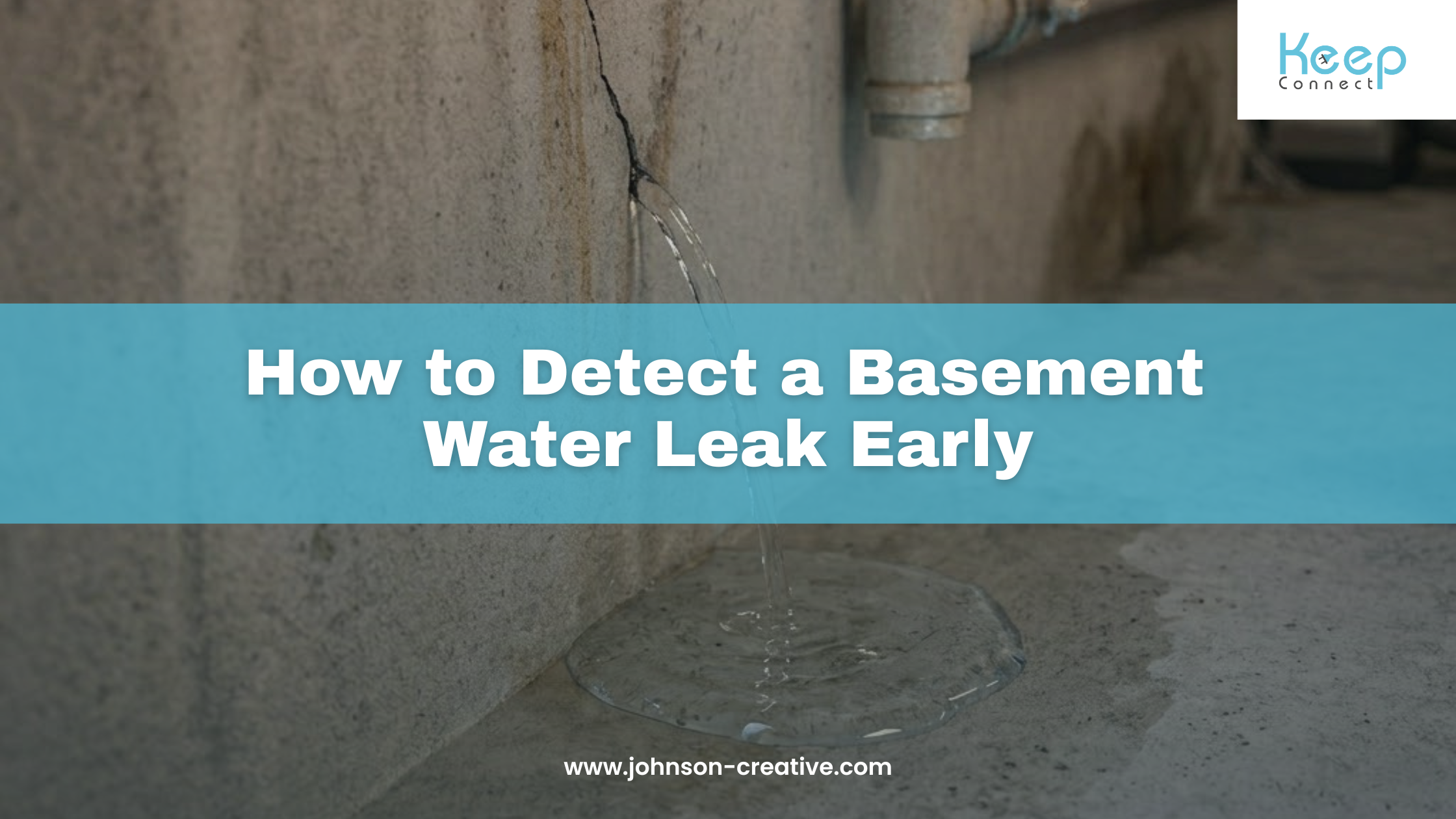
A basement water leak rarely begins with water covering the floor. The first clue may be a musty odor, a changing stain, white deposits on masonry, or dampness near an appliance. Finding it early gives you more time to locate the source and arrange repairs.
Those early clues are readable if you know what to look for. This guide covers the warning signs, how to tell a plumbing leak apart from seepage and condensation (they need different fixes and different professionals), and how to narrow the source before you call anyone.
To detect a basement water leak early, inspect after heavy rain and again while running plumbing fixtures. Look for musty odors, wall stains, white chalky deposits, peeling paint, and dampness along the wall-floor joint. Then run a two-hour water meter test with all water off. If the reading moves, you probably have a supply plumbing leak.
7 Early Signs of a Basement Water Leak
Standing water is an obvious warning. These quieter basement leak signs can appear sooner.
1. A musty or earthy odor
A musty smell can indicate damp materials or hidden moisture. Check behind boxes, beneath carpet edges, inside cabinets, and around utility equipment. Odor alone cannot identify the source, but it warrants inspection.
2. Stains that change after rain or water use
Dark patches can mark a current leak or an older water path. Water may travel before becoming visible.
Photograph the stain from the same position. Growth after rain points to exterior drainage or the foundation; changes after nearby fixture use point to plumbing.
3. White deposits on concrete or masonry

That powdery crust is efflorescence, mineral salts left when water moves through masonry and evaporates. It shows moisture has moved through the surface. It does not tell you whether water is still arriving, so treat it as a reason to keep watching.
4. Peeling paint or damaged finishes
Moisture blisters paint, softens drywall, swells baseboards, and lifts flooring at the seams. Press gently on suspect drywall. Sound material resists. Wet material gives.
5. Rust or corrosion near floor level
Rust rings on furnace legs, water heater bases, appliance feet, or steel support columns suggest water has been on that floor before, even if it is dry when you look. This is a useful sign of an intermittent leak and one that is easy to walk past.
6. A wall-floor joint that darkens after rain
Water may enter through a crack, window well, penetration, or wall-floor joint. Dampness after rain suggests an exterior drainage or foundation issue, though professional confirmation may be needed.
7. Unexplained water-meter movement
If the meter changes while every water-using fixture and appliance is off, you may have a supply plumbing leak. A water bill that rises without a clear change in household use can provide another clue. Rain intrusion, groundwater, and condensation won’t show up on the water meter.
Is It a Plumbing Leak, Seepage, or Condensation?
These problems can look similar but require different responses. More than one can occur at the same time.
|
Comparison Factor
|
Plumbing Leak
|
Groundwater or Rain Seepage
|
Condensation
|
|---|---|---|---|
|
When it appears
|
During fixture or appliance use, intermittently, or continuously
|
During or after rain and snowmelt
|
Often during humid weather
|
|
Where it appears
|
Near a pipe, fixture, appliance, or room with plumbing
|
Cracks, window wells, penetrations, or wall-floor joints
|
Across cold pipes, ducts, windows, or walls
|
|
Water-meter result
|
May change if supplied water is escaping
|
Does not change
|
Does not change
|
|
Who may help
|
Licensed plumber or appliance technician
|
Foundation, drainage, or waterproofing professional
|
HVAC, insulation, or moisture-control professional when needed
|
Condensation commonly forms when humid air meets a cold surface. The EPA recommends keeping indoor relative humidity below 60%, ideally between 30% and 50%. A hygrometer can help determine whether high humidity is contributing to the problem.
Read more about safe basement humidity levels and consult the EPA’s mold and moisture guidance.
Don’t rely on a single DIY test. Track when moisture appears and seek help if it returns or expands.
How to Find a Basement Water Leak: 7 Steps
Step 1: Check for immediate hazards
Do not enter standing water if it may be touching outlets, cords, appliances, or the electrical panel. Do not handle a plugged-in sump pump or appliance while standing on a wet floor. Avoid contact with sewage or potentially contaminated water. Leave unsafe areas and contact an appropriate licensed professional.
Step 2: Inspect from top to bottom
Start at the ceiling. Check below wet rooms, then inspect visible pipes, valves, appliances, windows, foundation walls, cracks, wall-floor joints, the sump pit, and drains.
When safe, check behind stored items for softened drywall, swollen trim, damp carpet, or rust.
Step 3: Confirm active dampness
Press a dry paper towel against the surface. A pinless moisture meter can compare it with nearby dry material, but readings vary. Use them as clues, not a diagnosis.
Never puncture a wall or ceiling when hidden pipes or electrical wiring may be present.
Step 4: Match moisture to timing
Record the date, weather, recent water use, location, and size of the damp area.
– Moisture after rain or snowmelt may point to grading, gutters, a window well, a foundation crack, or a wall-floor joint.
– Dampness after using a fixture may point to supply or drain plumbing.
– Moisture during humid weather may be condensation.
– Water appearing as the sump operates may involve the pit, pump, float, power source, or discharge line.
– Water during a washing-machine cycle may involve its supply hose, drain hose, pump, or standpipe.
Take repeat photographs from the same angle so changes are easier to see.
Step 5: Run a two-hour water-meter test

1. Turn off all faucets, fixtures, irrigation, and water-using appliances.
2. Make sure ice makers, humidifiers, and other automatic equipment will not use water.
3. Record the water-meter reading.
4. Wait two hours without using any water.
5. Read the meter again.
EPA WaterSense says a changed reading during a no-use period probably indicates a household leak. A negative test does not exclude every intermittent or drain-side problem. It also cannot detect rain intrusion, groundwater, or condensation. Follow the EPA’s water-meter leak-check instructions.
Step 6: Inspect outside the matching wall
Look for clogged gutters, short or disconnected downspouts, soil sloping toward the house, damaged window wells, cracks around penetrations, and low areas where water collects.
The U.S. Department of Energy explains that grading, gutters, downspouts, and foundation drainage help keep roof runoff from saturating the ground around a foundation. Review its foundation-drainage guidance and Johnson Creative’s basement flood-prevention checklist
Do not excavate or attempt structural repairs based only on a visual assumption.
Step 7: Monitor intermittent trouble spots
A surface can be dry now and wet later. Position a water leak detector at the likely first-contact point. For sump concerns, review sump-pump failure signs or monitor your sump pump
A sensor provides awareness. It does not diagnose the source, stop the water, or replace repairs.
Where to Place a Water Leak Sensor in a Basement
Place the sensing point where water is likely to arrive first, rather than in an arbitrary central location.
Beside the sump pit: Position it on the floor where an overflow would spread, not inside the pit.
At the water-heater drain-pan edge: Keep it clear of normal service activity.
Behind the washing machine: Favor the side nearest the hoses and connections.
Near a floor drain: Place it slightly away from the opening where backed-up water would spread.
Below exposed joints or valves: Prioritize locations with previous moisture or corrosion.
Along a wall-floor joint: Choose a low point where dampness has appeared after rain.
Near HVAC condensate equipment: Monitor where a drain or pan leak would release water.
Keep the probe clear of absorbent objects and routine splash zones. A large or finished basement may require several monitoring points.
How Water Pal Supports Earlier Awareness
Water Pal is a Johnson Creative water detector in the Power Pal product line. The Wi-Fi-connected device sends a notification when its wired two-prong probe detects water. The main unit can be mounted above the floor while the probe reaches a low or tight leak-risk area.
– Uses two AAA batteries
– Sends SMS, email, or both types of notification
– Provides basic alerts without a required subscription
– Supports a configurable battery-percentage notification
– Connects directly to Wi-Fi without a separate hub
– Is currently listed at $49.99
Review the official Water Pal setup guide before installation. Test the probe and confirm that notifications reach the correct phone number or email address. Retest according to the manufacturer’s instructions after changing the Wi-Fi network, alert contact, or device location.
Water Pal is not an automatic shutoff system. It cannot guarantee detection before damage occurs and does not replace plumbing repair, drainage, waterproofing, maintenance, or professional inspection.
Get notified when water reaches a monitored trouble spot. Water Pal provides SMS or email notifications with no required subscription for basic alerts. View Water Pal and its current price.
Who to Call for a Basement Leak
|
Situation
|
Appropriate Professional
|
|---|---|
|
Meter changes while all water use is stopped
|
Licensed plumber or water utility for guidance
|
|
Moisture repeatedly follows rain
|
Drainage, foundation, or waterproofing professional
|
|
Water reaches outlets, wiring, or appliances
|
Licensed electrician before re-entering or handling equipment
|
|
Large areas of carpet, drywall, or insulation are wet
|
Water-damage restoration professional
|
|
Sewage or contaminated water is involved
|
Qualified remediation professional
|
|
A crack is widening, displaced, horizontal, or accompanied by bowing
|
Structural engineer or qualified foundation professional
|
After controlling the source, begin drying safely and promptly. The EPA recommends drying wet or damp materials within 24 to 48 hours in most cases to help prevent mold growth. If mold covers more than about 10 square feet, contaminated water is involved, or health concerns exist, consult the EPA guidance and an experienced professional.
Frequently Asked Questions
What is usually the first sign of a basement water leak?
Early signs can include a musty odor, changing stain, white mineral deposits, peeling paint, rust near floor level, or dampness along a wall-floor joint. No single sign identifies the source, so compare the location with recent weather and plumbing use.
How can I distinguish a leak from condensation?
Condensation often appears across cold pipes, ducts, windows, or walls during humid weather. A leak is more likely to recur at a particular point or follow rain, snowmelt, or fixture use. Check indoor humidity, track the timing, and seek professional evaluation if the cause remains unclear.
Can a water meter identify a basement leak?
A no-use meter test may identify water escaping from supplied plumbing. It cannot detect foundation seepage, rain intrusion, groundwater, condensation, or every intermittent or drain-side leak. If the meter changes while no water is being used, contact a plumber or water utility.
Does homeowners insurance cover a basement water leak?
Coverage depends on the policy and cause. Sudden accidental plumbing discharge may be treated differently from groundwater, flooding, gradual seepage, or deferred maintenance. Standard homeowners policies generally do not cover flooding. Document the damage and contact your insurer for a policy-specific decision.
Will a water leak sensor prevent basement flooding?
No. A sensor can notify you when water reaches its sensing point, but it does not necessarily stop the source. Earlier awareness may shorten response time; maintenance, drainage, waterproofing, appropriate shutoff equipment, and repairs address the underlying risk.
How often should I inspect my basement?
Inspect routinely and after heavy rain, snowmelt, plumbing work, extended travel, or unexplained changes in water use. Test leak-detection devices according to their manufacturers’ instructions. EPA WaterSense recommends checking installed leak-detection or flow-monitoring systems at least annually.
Catch the First Clue, Not the Last
Learn your basement’s normal appearance and smell. Check it when weather or plumbing conditions change, document suspicious areas, and monitor places where water would arrive first. If moisture appears, address the source rather than only repairing the visible stain.
For another layer of awareness in basements and other leak-prone areas, explore Water Pal.