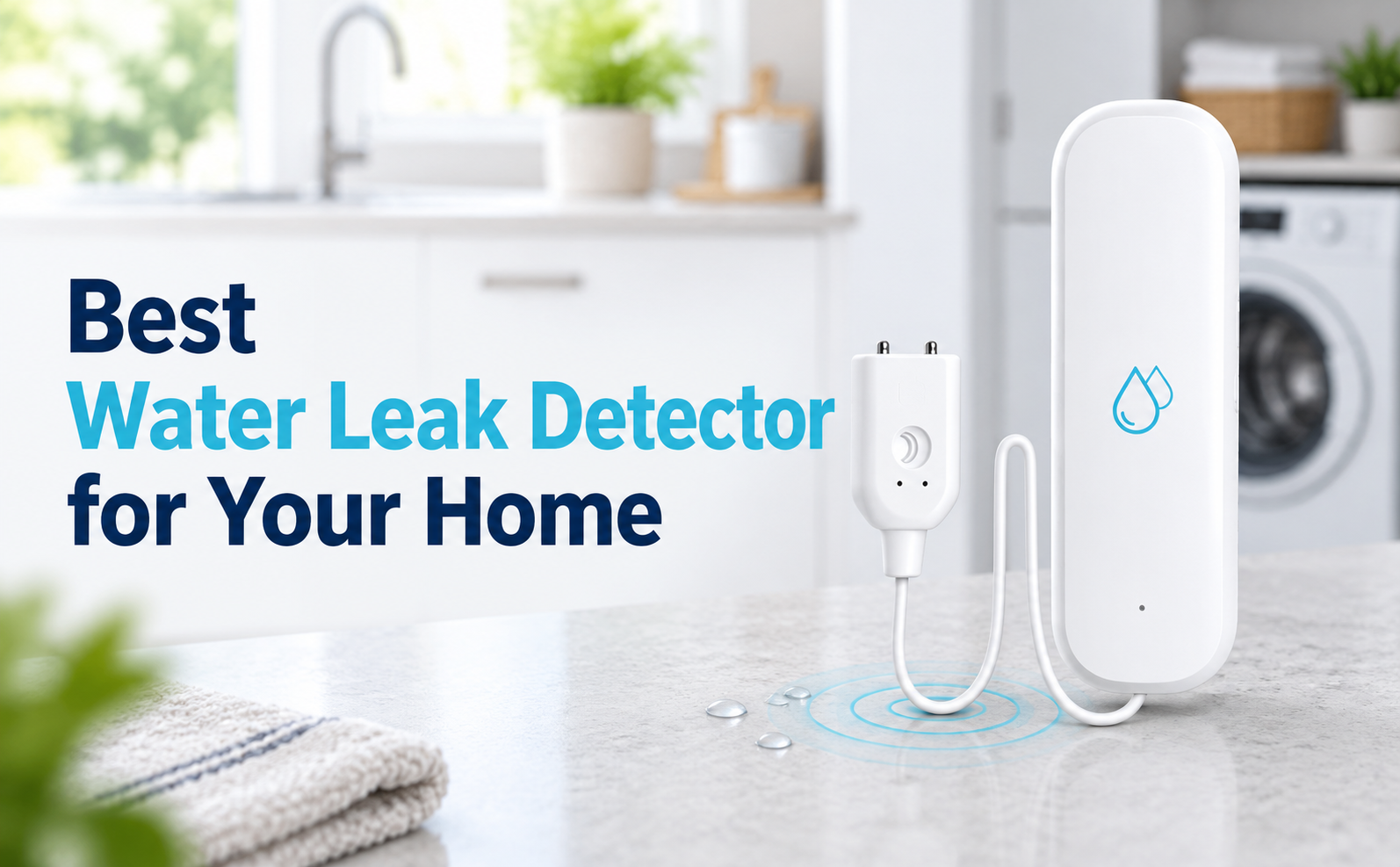
Quick answer: The best water leak detector for most homes connects straight to your WiFi, sends a text or email the moment water touches its sensor, and needs no paid plan for basic alerts. A wired probe and a low-battery alert make it easier to place and easier to trust.
A water heater starts dripping on a Tuesday morning while you are at work. Then, by the time you get home, the water has soaked the subfloor and crept under the drywall.
A small sensor on the floor beside it could have texted you as soon as the water reached it.
That is why a WiFi water leak detector matters. It alerts you early enough to shut off the water before a small cleanup becomes a major repair.
First, this guide explains how these detectors work. Then it covers which features matter, where to put them, and how to set one up.
Disclosure: Water Pal is made by Johnson Creative, the publisher of this guide.
Why every home needs a WiFi water leak detector
Water damage is common. It is also expensive.
In fact, water damage and freezing are the second most frequent homeowners insurance claims, with an average claim of $15,400, according to the Insurance Information Institute, citing ISO data for 2019 to 2023. In other words, only wind and hail claims are filed more often.
Also, most indoor leaks start small and in places you rarely look:
- A water heater tank that has started to corrode
- A washing machine supply hose
- A dishwasher or refrigerator ice-maker line
- A slow drip under a sink
- A toilet supply line behind the bowl
Meanwhile, the damage grows with time. For example, a leak you find in five minutes is a towel and a shutoff valve. However, a leak you find in five hours can mean new flooring, drywall and mold remediation.
Worst of all is the leak you never hear about. A WiFi water leak detector, sometimes called a smart water sensor, sends the alert to your phone, so you know while you are at work, asleep upstairs, or on vacation.
How do water leak detectors work?
Most home water leak sensors use a simple principle. Water conducts electricity. When water bridges two metal contacts, the circuit closes and the device triggers an alert.
Differences come from how the sensor contacts the floor and how the alert reaches you.
Probe and contact sensors

The contacts sit on the underside of the device or on a small probe. They detect water at the exact spot where it collects. This is the most common design and works well beside water heaters, under sinks, and next to appliances.
A wired probe separates the sensing tip from the main unit. Place the probe on the floor where water will pool first, and mount the unit higher on the wall. The unit stays dry, is easy to reach, and is easy to check.
Sensing cables
A sensing cable detects water along its length. It is a specialty option for very long runs, such as a full wall of a finished basement.
WiFi direct vs hub-based sensors
WiFi direct sensors connect straight to your home router. Setup is simple, and there is no extra hardware to buy, power or maintain.
Hub-based sensors talk to a base station, which then connects to your network. That adds another device that must stay plugged in and online for alerts to work.
Either way, the sensor needs a working internet connection to reach your phone.
Key features to look for
These features determine whether a leak detector actually protects your home.
Alert method: SMS, email, app or siren
| Alert type | Best for | Watch out for |
|---|---|---|
| SMS text | Anyone who wants alerts without installing an app | Check whether texts need a paid plan |
| A second alert channel and a written record | Easy to miss if used alone | |
| App push | Smartphone users who keep notifications on | Needs the app installed and permitted to notify |
| Local siren | Homes where someone is always present | Does nothing when nobody is home to hear it |
The strongest setup uses two channels, such as a text and an email, so one missed notification is less likely to mean a missed leak.
Subscription vs no subscription
Some leak detectors include basic alerts with the device. Others put text alerts or alert history behind a monthly plan. A cheap sensor with a required plan can cost more over a few years than a sensor with no required plan. Check the product page for the exact wording before you buy.
Battery power and low-battery alerts
Battery sensors go anywhere, including the back of a cabinet with no outlet nearby. The risk is a battery that dies without warning. Look for a low-battery alert so the sensor tells you before it stops protecting you.
Temperature and freeze monitoring
In cold climates, a frozen pipe can burst and flood a room. A leak sensor tells you when water appears. A dedicated temperature sensor warns you before a pipe freezes. Homes with an unheated crawl space, or homes left empty in winter, benefit from both.
Placement flexibility
Check the design against where it will go. A wired probe reaches behind a water heater or into a tight cabinet while the unit stays mounted and dry.
Where to put a water leak detector
Put each sensor at floor level, at the lowest point near a water source. Water flows downhill, so it collects at the lowest point first.

| Location | Why | Placement tip |
|---|---|---|
| Water heater | Tanks corrode and valves drip | Probe on the floor beside the base, or inside the drain pan |
| Washing machine | Supply hoses fail without warning | Probe behind the machine, near the hose connections |
| Kitchen sink | Drain and supply lines leak slowly | Probe at the back of the cabinet floor |
| Bathroom sinks and toilets | Supply lines and wax seals fail | Probe beside the toilet base and under the vanity |
| Dishwasher and refrigerator | Supply lines and ice-maker lines | Probe on the floor as close to the line as possible |
| Basement and sump pit | Seepage and pit overflow | Probe at the lowest point of the floor, near the pit |
For basement-specific warning signs and inspection steps, see our guide on how to detect a basement water leak early.
A leak sensor alerts you when water appears. If your basement relies on a sump pump, a pump monitor warns you about pump trouble before the pit overflows. Our comparison of a water leak sensor vs a sump pump monitor explains when you need one, the other, or both.
WiFi water leak detector checklist
Use this checklist when you shop. Each feature solves a real problem.
| Feature | Why it matters | Water Pal |
|---|---|---|
| Connects directly to home WiFi | Uses your existing home network | ✔Yes |
| SMS text alerts | Reaches you even without an app | ✔Yes |
| Email alerts | A second channel and a written record | ✔Yes |
| Choose SMS, email or both | Two channels reduce the chance that one missed alert becomes a missed leak | ✔Yes |
| No subscription for basic alerts | No monthly fee to stay protected | ✔Yes |
| Wired leak probe | Probe on the floor, unit mounted and dry | ✔Two-prong probe |
| Low-battery alert | Warns you before the sensor stops working | ✔Set your own battery threshold |
| Battery powered | Works where there is no outlet | ✔2 AAA batteries |
| Energy-saving mode | Helps stretch battery life | ✔Sleep mode |
| Wall or surface mounting | Keeps the unit out of standing water | ✔Yes |
Water Pal by Keep Connect: features, setup and cost

Water Pal is Johnson Creative’s WiFi water leak detector. It is built for one job: telling you about a leak, wherever you are. The details below come from the Water Pal product page and setup guide.
Who Water Pal is for
- Homeowners who want leak alerts as regular texts and emails
- People who are often away from home, at work or traveling
- Landlords and second-home owners who want to know about a leak without being on site
- Anyone who does not want a monthly fee for basic leak alerts
Detection and probe design
Water Pal uses a two-prong leak detection probe on a wired sensor. The product page says it recognizes even the smallest presence of water.
The wired sensor reaches floor level and tight spaces. Mount the unit on a wall or surface, and let the probe hang down to the leak-risk area. The unit stays up, dry and easy to check.
Alert options
- SMS, email, or both. You choose the notification mode during setup.
- The phone and inbox you already use. Alerts arrive as regular texts and emails.
- Water detected or water gone. The setup guide lets you choose whether to be alerted when water is detected or when it is no longer detected.
Setup and everyday use
Insert two AAA batteries, connect Water Pal to your existing home WiFi, then mount it. The Water Pal setup guide walks through each screen. Water Pal sleeps between check-ins to save energy. Retest it after any change to your WiFi.
Battery monitoring
Set a battery percentage threshold during setup. Water Pal sends a notification when the battery drops below it, so you can swap the batteries before protection lapses.
Price and ongoing costs
- Water Pal: $49.99
- Basic leak alerts: no required subscription and no monthly fee
- Optional: Keep Connect Premium Cloud Services add in-depth data, advanced scheduling and multi-device management
One unit per water source covers the most common leak points in a home.
Build a complete home protection setup
Water Pal pairs with other Johnson Creative sensors to cover more risks:
- Climate Pal sends SMS or email alerts when temperature or humidity readings go outside the thresholds you set. Use it to keep an eye on cold areas, such as a crawl space.
- Pump Pal watches your sump pump. It uses power-usage data to spot problems such as dry-run, overload and a stuck float switch.
See how it works alongside Water Pal in our water leak sensor vs sump pump monitor guide.
How to set up a WiFi water leak detector
Most WiFi leak detectors follow the same five steps. Always follow your model’s own instructions.
- Pick the spot. Choose the lowest point near the water source, using the placement table above.
- Power it up. Insert the batteries or plug it in.
- Connect it to WiFi. Use the app or the device’s setup page. Check which WiFi networks your model supports before you start.
- Choose how you get alerts. Turn on two channels if the device offers them, such as SMS and email.
- Test it. Touch the sensor or probe with a damp paper towel and confirm the alert reaches your phone. Dry the contacts afterward.
For Water Pal, the Water Pal setup guide walks you through connecting to the device’s own WiFi network, choosing your home network, selecting Email, SMS or both, and setting your battery threshold.
Retest after any network change. A new router, a new WiFi password or a new internet provider can disconnect every sensor in the house. Run the damp paper towel test again the same day.
Frequently Asked Questions
How fast do water leak detectors detect leaks?
A contact sensor triggers as soon as water bridges its contacts. How fast the alert reaches you depends on the device, your WiFi, and the alert service. Test your own sensor after installation so you know what to expect in your home.
Do water leak detectors work for slow leaks?
Yes, if the water reaches the sensor. A slow drip that pools on the floor will trigger it. That is why placement matters: put the probe at the lowest point beside each water source, where even a slow drip collects first.
Can I use multiple water leak detectors in one home?
Yes. Most homes need one sensor per water source: the water heater, washing machine, each sink, each toilet and the sump area. Start with the water heater and washing machine, then add sensors room by room.
Do WiFi water leak detectors need a subscription?
It depends on the device. Some include basic alerts, and others require a paid plan for certain alert types. Water Pal does not require a subscription for basic SMS or email alerts. Optional premium cloud services add extra features.
Do WiFi water leak detectors work if the internet goes down?
A WiFi sensor needs a working internet connection to reach your phone. If your router often freezes, an automatic router rebooter can power cycle it when the connection drops. That clears many router-side failures, but no device can fix an internet provider outage.
Where is the best place to put a water leak detector?
On the floor, at the lowest point next to a water source. The most common spots are beside the water heater, behind the washing machine, under sinks, beside toilets, and near the sump pit.
Catch the leak before it becomes a repair
A water leak detector with WiFi alerts is one of the simplest ways to protect your home from one of its most expensive problems. Choose alerts you will actually notice, skip required subscriptions, and put a sensor at every water source.
Water Pal sends text and email leak alerts straight to your phone, with no required subscription for basic alerts. It connects to your home WiFi, runs on two AAA batteries. Get Water Pal and protect your home before the next drip.