Remote temperature monitoring uses a connected sensor to check conditions in a home or other property when you are not there. When a scheduled reading crosses the limit you set, the system sends you a notification. It can warn you about a heating or cooling failure, excess humidity, or an equipment room that is getting too warm. It still depends on a working sensor and a working path for the alert.
In an occupied home, someone may notice the heat stopping or a room feeling damp. At an empty property, the same change can continue until the next visit.
However, a remote temperature and humidity sensor shortens that blind period. Still, it does not prevent Its job is to tell the right person when conditions move outside an expected range, while there is still time to respond.
In short, this guide covers general indoor monitoring for homes, vacation properties, rentals, greenhouses and small equipment rooms. In contrast, regulated medical, laboratory, food storage and cold chain applications need purpose-built systems that meet their own calibration, recordkeeping and compliance requirements.
Table of Contents
What remote temperature monitoring means

Remote temperature monitoring means measuring temperature in one location and sending the reading, or an alert, to someone who is somewhere else. Many home systems also measure relative humidity, because heat and moisture create different risks.
However, a remote monitor is not the same as a basic thermometer or a smart thermostat.
| Device | What it does | Can notify you while you are away? | Controls heating or cooling? |
|---|---|---|---|
| Thermometer or hygrometer | Displays the conditions where it sits | Usually no | No |
| Smart thermostat | Measures conditions and controls compatible HVAC equipment | Depends on the model and service | Yes |
| Remote temperature and humidity sensor | Measures conditions and sends readings or threshold alerts through a connected service | Yes, when the alert path is working | Usually no |
A thermostat typically reports the area around it. A separate sensor can monitor a basement, crawl space access area, greenhouse, storage room, or network closet, where conditions may differ.
One sensor covers one monitoring zone. Walls, floors, direct sunlight, vents, exterior doors and heat-producing equipment can create different conditions inside the same building. If two areas carry different risks, they may need separate sensors.
Where remote monitoring helps
The best place for a sensor is not always the room you use most. It is the place where an unnoticed change would be expensive, unsafe or hard to discover.
Homes, basements and rentals
| Location | Main concern | What to monitor | Useful next step |
|---|---|---|---|
| Vacation or second home in winter | Heating failure and frozen pipes | Low temperature | Plan whole-home monitoring before you travel |
| Basement or crawl space access area | Lasting humidity, condensation and vulnerable pipes | Humidity and low temperature | Review safe basement humidity levels |
| Whole house in summer | Damp, sticky air | Humidity | Find the causes of high humidity in the house |
| Living space during a heat wave | Air conditioning that cannot keep up | High temperature | Check the warning signs your AC is running too much |
| Vacation rental between guests | HVAC failure or damp conditions | High and low temperature, humidity | Learn how to monitor temperature remotely |
Greenhouses, equipment rooms and other spaces
| Location | Main concern | What to monitor | Useful next step |
|---|---|---|---|
| Greenhouse or indoor garden | Conditions outside the plants' preferred range | Temperature and humidity | Use the grower's guidance for the specific plants |
| Home server or network closet | Heat buildup and poor airflow | Temperature near the equipment's intake air | Use the equipment manufacturer's environmental limits |
| Storage room or workshop | Conditions that may affect stored materials | Temperature, humidity or both | Use the storage guidance for the material you are protecting |
| An older relative's home | Heating or cooling failure while the person is alone | Household temperature | Use the household or care plan. A sensor is not a medical alarm |
What the reference points say
Cold weather. For homes left empty in winter, the American Red Cross advises leaving the heat on, set no lower than 55°F. That is a thermostat recommendation, not a universal sensor alarm setting. Your alert should give enough warning for someone to act before vulnerable pipes approach freezing.
Moisture. The US EPA advises keeping indoor relative humidity below 60%, ideally between 30% and 50%. The EPA’s separate 24 to 48 hour guidance is about drying wet or damp materials after a leak or spill. It does not mean mold automatically starts after a fixed number of hours above 60% humidity.
Equipment rooms. ASHRAE lists 18°C to 27°C (64.4°F to 80.6°F) as the recommended inlet temperature range for common datacom equipment classes. Treat that as a reference, not a universal server closet alarm. Follow the equipment maker’s limits, measure the air the equipment actually draws in, and allow for how quickly someone can respond.
Why earlier notice matters. Water damage and freezing claims are costly. The Insurance Information Institute reports an average claim severity of $15,400 for water damage and freezing from 2019 to 2023. A sensor cannot guarantee that damage is prevented, but earlier notice can buy time to investigate.
How the alert path works

Most connected monitoring systems follow a similar path.
- Measure. The sensor takes a temperature or humidity reading.
- Compare. The device or service checks the reading against the condition you set.
- Transmit. The reading or event travels over WiFi, through a hub, or over a cellular connection.
- Notify. The service sends a text, an email, an app notification or another supported alert.
- Respond. A person checks the property, calls a neighbor or contractor, or takes another planned action.
The fifth step is the one product pages often skip. An alert only helps when someone receives it, knows which property and sensor sent it, and knows what to do next.
Make a simple response plan before you leave a property empty:
- Name a first contact and a backup contact.
- Put the property and room in the alert message.
- Decide who can enter the property.
- Keep numbers for the HVAC company, plumber, electrician, property manager or IT support.
- Test the full alert path after setup, and again after changing batteries, WiFi details or alert settings.
For installation, follow the step-by-step guide to monitor temperature remotely.
Choosing the right connection type
“Wireless” describes several different systems. The right one depends on whether you need local readings, alerts from another city, or alerts that keep working when the property’s internet fails.
| Connection | What it needs | Best fit | Main limitation |
|---|---|---|---|
| Direct WiFi | A compatible WiFi network and internet service | Homes and small properties with reliable internet | Cannot send while the router, internet or power is down |
| Bluetooth | A nearby phone or gateway | Local checking, or systems with a dedicated gateway | Bluetooth alone does not give you remote access over the internet |
| Hub-based | Compatible sensors and a powered hub or gateway | Larger smart home systems, or many low-power sensors | More hardware and more compatibility decisions |
| Cellular | Cellular coverage and usually a service plan | Remote sites, or properties that need an alert path independent of local WiFi | Ongoing cost and coverage requirements |
Other buying factors include alert methods, reporting intervals, battery notifications, history, operating range, accuracy, calibration and subscription terms. Our WiFi temperature and humidity sensor buying guide compares those in detail.
Setting useful alert limits
A good alert limit warns you early enough to act, without notifying you about ordinary changes all day.
Start with the risk
Decide what you are trying to catch: a furnace that stopped, a basement that stays damp, a greenhouse that leaves the plants’ range, or a network closet running hotter than usual. Use authoritative or manufacturer guidance for whatever you are protecting.
Leave a response margin
Don’t wait for the exact point of damage. If the property is three hours away, the alert must arrive while you still have time to get there or send someone local.
For a winter home, compare the sensor reading with the normal thermostat setting and with the coldest monitored zone. A low alert several degrees below the property’s normal reading can show that the heat has stopped before vulnerable areas approach freezing. The right margin depends on the building, the weather, the sensor’s location and your response plan.
Avoid limits that are too sensitive
A sensor beside an exterior door, a sunny window, a supply vent, a radiator, server exhaust, a shower or a humidifier may report a local spike rather than the room’s normal condition. Move the sensor before you widen the limit just to stop nuisance alerts.
Test the complete path
Temporarily set a condition just past the current reading, so the next scheduled reading meets it. Confirm that the right people receive the alert and understand it. Then restore your real setting.
Test again after:
- changing the WiFi name or password
- replacing batteries
- moving the sensor
- changing the reporting schedule or a limit
- changing a phone number or email address
The weak points: sensor, internet and power
A remote monitor is a chain. The sensor, its batteries, the local network, the internet connection, the remote service and the notification channel all have to work.
| Failure | What a WiFi sensor can report | How to reduce the gap |
|---|---|---|
| Heating or cooling fails, power and internet stay on | A scheduled reading can trigger your alert | Leave a response margin and test alerts |
| Sensor battery runs low | Only if you set a battery alert | Set one, and replace batteries before winter |
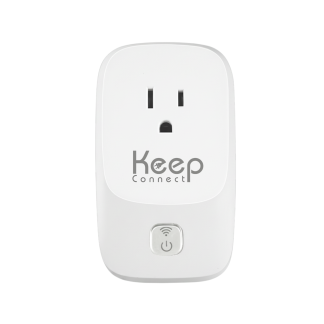
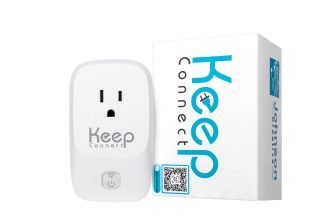
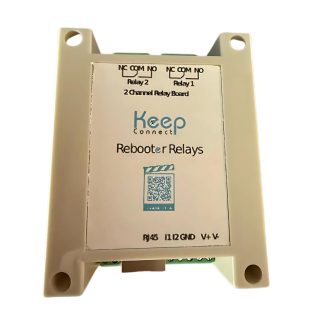
| Router hangs, power stays on | Nothing. It cannot send through a failed router | Add router recovery, such as Keep Connect |
| Internet provider fails | Nothing, for a WiFi-only sensor | Wait for service, or add a cellular backup path |
| Property loses power | The sensor may keep running, but the router usually goes down | A UPS for short outages, or a server-monitored power loss device |
| Sensor stops checking in | Depends on whether the service sends an offline alert | Confirm this feature before relying on it |
How to close the gaps
A small uninterruptible power supply (UPS) can keep a modem and router running through some short outages. Runtime depends on the UPS, its battery condition and the connected load. A UPS is not a substitute for a power loss alert, or for a plan for a long outage.
For properties where freezing and power failure both matter, think in three layers:
-
Condition
A temperature and humidity sensor watches the space.
-
Connection
A router recovery device restarts a router that has power but stops responding.
-
Power
A separate power monitor tells you when the property loses power.
No single device covers every layer. This is the most important limitation to understand before relying on remote monitoring.
Where Climate Pal fits
Climate Pal is a battery-powered WiFi temperature and humidity sensor made by Johnson Creative LLC, for general indoor monitoring.
According to the Climate Pal product page and setup guide, Climate Pal:
- measures temperature and relative humidity
- runs on two AAA batteries
- connects directly to your existing WiFi, with no separate hub
- reads in Celsius or Fahrenheit
- lets you set an above or below condition for temperature, humidity and battery level
- sends SMS, email or both
- takes readings on a schedule you choose
- sends its core threshold alerts with no subscription required
- offers optional Keep Connect Cloud Services for features such as historical data and advanced scheduling
When a scheduled reading meets the above or below condition you set, Climate Pal can send an SMS, an email or both. It does not heat, cool, ventilate or dehumidify. It does not detect water on the floor. Like any WiFi sensor, it needs a working path to send a temperature or humidity alert.
Johnson Creative does not currently publish Climate Pal’s operating temperature range, measurement accuracy, typical battery life at a set interval, or offline alert behavior. Until it does, check with Johnson Creative before using Climate Pal outdoors, in refrigerated spaces, or for regulated, medical, food safety or safety-critical monitoring.
When PowerPal adds coverage
PowerPal watches a different failure. While power is on, it sends a heartbeat signal to Keep Connect servers. When power is lost, the heartbeat stops and the servers send your alert. The alert starts away from the property, so it still arrives when the outage also takes down the WiFi.
Climate Pal and PowerPal work together when the main concerns are indoor conditions and loss of power. Keep Connect covers the connection layer: it power cycles the modem or router when the internet connection drops while power is still on.
Climate Pal alerts you when temperature or humidity crosses your limit. PowerPal alerts you when the property loses power. Neither one heats, cools or dries the space.
Frequently Asked Questions
What is remote temperature monitoring?
Remote temperature monitoring uses a connected sensor to measure temperature in one location and send the reading or an alert somewhere else. In addition, home systems often include humidity and may notify you by SMS, email or an app, depending on the product.
Can I monitor temperature without a hub?
Yes. For example, a direct WiFi sensor connects to a compatible WiFi network without a separate hub. In contrast, Bluetooth and Zigbee sensors may need a nearby phone, gateway or compatible smart home hub for remote access. Climate Pal, for instance, connects directly to WiFi.
Will a WiFi temperature sensor alert me during a power outage?
Not through the property's WiFi if the outage also turns off the modem and router. A battery sensor may keep taking readings, but it has no working internet path for the alert. Meanwhile, a UPS may keep the network online for a while. Alternatively, a separate server-monitored power device or a cellular system can provide another alert path.
What temperature should I use for a freeze alert?
In short, there is no single setting for every home. The American Red Cross advises leaving the heat on, set no lower than 55°F, while you are away. Instead, set the sensor alert high enough above freezing to allow for colder areas near vulnerable pipes and the time you need to respond. A plumber or HVAC professional can assess a specific property.
What humidity level should trigger an alert?
The US EPA recommends keeping indoor relative humidity below 60%, ideally between 30% and 50%. An alert above 60% is a reasonable starting point for many indoor spaces, but placement and duration matter. For example, a short bathroom spike is different from a basement that stays above 60% for days.
Can one sensor monitor an entire house?
One sensor reports the conditions around its location. For example, a living room reading may not reflect a basement, crawl space access area, attic or equipment closet. So use separate sensors where spaces have different temperatures, humidity patterns or consequences of failure.
Does a remote temperature sensor control heating or cooling?
Usually not. A monitoring sensor measures and alerts. A smart thermostat or building control system may also control equipment, but that is a different function. Similarly, Climate Pal monitors and notifies. It does not control HVAC or a dehumidifier.
Can Climate Pal send alerts without a subscription?
Yes. In fact, Climate Pal's core SMS and email threshold alerts do not require a subscription. Optional Keep Connect Cloud Services add features such as historical data and advanced scheduling. Check the product page for current plans and pricing before ordering.
Start with the failure you cannot afford to miss
Choose the space first, then the sensor. Name the condition that would cause damage, set a limit that leaves time to respond, and test the full path from scheduled reading to human action.
For a home that may sit empty, also plan for the failures around the sensor. Temperature monitoring covers the condition. Router recovery helps when the router hangs. Power loss monitoring covers the outage a WiFi temperature alert cannot send through.
If indoor temperature and humidity alerts are the missing layer, see Climate Pal. If power loss is the bigger blind spot, see PowerPal.