A central AC unit should run for about 15 to 20 minutes per cycle. If yours is running longer or cycling more frequently, it is either oversized, undersized, struggling with airflow, or starting to fail, and it is costing you on every cycle.
If your AC is running too much, the problem isn’t always easy to detect. The thermostat may indicate the house is cool, but one room still feels warm. The system may run for long periods, shut off briefly, and then start again. Or your electric bill can shoot up compared to last summer.
Here are the warning signs to watch for, the reasons behind them, and how to monitor AC performance before a small problem becomes an expensive HVAC repair.
Table Of Contents
1. How Long Should an AC Run Per Cycle? (The Baseline)
2. 5 Warning Signs Your AC Is Running Too Much
2.1. Sign 1: Runs for more than 30 minutes without reaching temperature
2.2. Sign 2: Cycles on and off every 5 to 10 minutes (short cycling)
2.3. Sign 3: Rooms are never quite as cool as the thermostat shows
2.4. Sign 4: Unusually high electricity bill compared to prior summers
2.5. Sign 5 — Warm or humid air coming from vents
3. What Causes an AC to Run Too Much?
3.1. Oversized unit that short-cycles
3.2. Refrigerant leak
3.3. Dirty coils or filter
3.4. Home is poorly insulated or sealed
4. How to Monitor Your AC Without Calling an HVAC Tech
4.1. WiFi temperature sensors — see if your home is actually reaching target temp
4.2. Energy monitors track power draw to detect efficiency drops
4.3. How Climate Pal reveals AC performance patterns over time
4.4. When to Call an HVAC Technician
5. Frequently Asked Questions
How Long Should an AC Run Per Cycle? (The Baseline)
On a typical summer day, you should see a normal central AC unit run approximately 15 to 20 minutes per cooling cycle. Shorter cycles could mean the system is oversized or short cycling. Longer cycles could mean the AC is too small, dirty, low on refrigerant, not well ventilated, or not getting to the thermostat setting.
That’s the simple rule.
Your AC doesn’t have to run for 15 minutes every time. The length of a cycle depends on outdoor temperature, humidity, insulation, thermostat setting, system size and how much heat the home absorbs.
But it’s worth checking when the pattern gets extreme.
A healthy AC generally:
- Turns on when indoor temperature rises above thermostat setting
- Runs long enough to drop heat and humidity
- Shuts down when reaches desired temperature
- It shuts off for a reasonable amount of time before the next cycle.
An inefficient or unhealthy AC can run all the time, short cycle every few minutes or not make the house feel comfortable when the thermostat says it should.
5 Warning Signs Your AC Is Running Too Much
If your air conditioner is running constantly or cycling too often, these are the five warning signs to check first.
Sign 1: Runs for more than 30 minutes without reaching temperature
If your AC runs longer than 30 minutes and can’t reach the thermostat setting, the system may be struggling.
This can happen on very hot days, especially in the afternoon at the height of the heat. But if it’s happening all the time, there might be a problem.
Some common causes include:
- Dirty air filter.
- Dirty evaporator or condenser coil
- Low refrigerant level
- Ductwork leaks
- Poor insulation in the attic
- Leaking air around doors or windows
- Small AC unit
- Blocked air vents
- Poor airflow
- Thermostat location problem
If the thermostat is set to 74°F and the house remains at 78°F for hours, your AC is not keeping up. It may still be running but not well.
This is important because longer run times mean more electricity consumption and more wear and tear on the compressor, blower motor, and other parts.
Keep a watch on this if it’s only during a heatwave. If it occurs every hot day, it’s best to investigate.
Sign 2: Cycles on and off every 5 to 10 minutes (short cycling)
Short cycling is when the AC turns on and off too often.
It doesn’t run for a normal cooling cycle; it starts, runs for a few minutes, shuts down, and then starts again in a short time. This is tough on the system and can drive up your energy bill.
Possible reasons for AC short cycling include:
- Large AC system
- Dirty air filter
- Evaporator coil frozen
- Refrigerant low
- Bad thermostat
- Electrical trouble
- Blocked condensate drain
- Bad airflow
- The thermostat is in the wrong position
One of the clearest signs that your AC is not working properly is short cycling.
It can also make your home feel less comfortable because the system may not run long enough to remove the humidity. Even if the air is cool for a moment, the room still feels sticky or uneven.
Don’t ignore your AC cycling every 5 to 10 minutes. This pattern can lead to parts wearing faster.
Sign 3: Rooms are never quite as cool as the thermostat shows
The thermostat might say one thing, but the house might say another.
The thermostat might say 74 degrees, but the upstairs bedroom feels like 80 degrees. “Or the living room feels comfortable, but another room is still hot and humid.
This can occur due to the fact that the thermostat takes the temperature at only one location. “This doesn’t always show what’s happening throughout the rest of the house.
Common causes are:
- Bad air circulation
- Clogged vents
- Leaky ductwork
- Hot attic over the room
- Bad insulation
- Sun at noon
- Inside Doors Closed
- Poor return air flow.
- Ductwork that passes through hot spaces
That’s where HVAC temperature monitoring comes in. If a room feels uncomfortable, a WiFi temperature sensor can tell whether that space is actually at the target temperature.
If one room never cools down, then the problem may not be with the thermostat setting. Airflow, insulation, heat in the attic, duct design.
For related attic heat issues, see How to Monitor Attic Temperature in Summer.
Sign 4: Unusually high electricity bill compared to prior summers
Bigger summer bills are normal.
A sudden jump is not always a normal one.
If your electric bill is much higher than last summer and your thermostat behavior hasn’t changed, your AC may be running longer than it should.
Look for these clues:
- AC runs longer than normal
- House still feels bad
- It feels more humid in here
- The filter has not been changed; thermostat setting is lower than it used to be
- Outdoor unit appears dirty or blocked
- Unequal room cooling
- Energy use increases even in same weather
Air conditioning is a huge drain on summer energy use, so every little efficiency problem can make a big difference.
If you want the cost side of this problem, read How Much Electricity Does an AC Use? The article explains how AC wattage, electric rates, and runtime are calculated into your monthly bill.
Sign 5 — Warm or humid air coming from vents
Your vents should not be blowing warm air while the AC is busy cooling.
If the air is warm, weak, or particularly humid, the system may not be able to remove heat.
Possible causes are:
- Refrigerant is low
- Dirty evaporator coils
- Coils frozen
- Air filter dirty
- Compressor trouble
- Thermostat issue
- Ductwork Leaks
- Outdoor unit obstruction
- Fan issue
Humidity is also critical. Your AC also dehumidifies as it cools. If the house feels sticky even though the thermostat is at the right temperature, the system might not be working correctly or long enough to dehumidify the air.
Large air conditioners can do this as well. They cool the air too quickly, turn off too soon, and leave too much humidity.
For more information on indoor humidity, see High Humidity in the House.
What Causes an AC to Run Too Much?
An AC that runs too much is usually dealing with one of four problems: wrong system size, refrigerant issues, dirty components, or a home that is letting too much heat in.
Oversized unit that short-cycles
Bigger AC is not always better.
If the unit is too large, it may cool the air too fast and turn off before it has run a proper cycle. This causes short cycling, inconsistent comfort, and poor humidity removal.
Signs your AC is too big include:
- Very short run cycles
- Lots of starts and stops
- Cold, clammy rooms
- Temperatures vary
- Higher energy prices
- Poor humidity control
The system may technically cool the area of the thermostat, but it doesn’t run long enough to balance the whole house.
Refrigerant leak
Refrigerant is what allows your AC to pull heat out of the inside of your home and dump it outside.
If the refrigerant is low because of a leak, the system may run longer but not run as good.
Signs may be:
- Warm air from the vents,
- Refrigerant lines with ice
- Hissing sound around the unit
- Extended runtimes
- Bad cooling.
- Higher electricity prices
You don’t just “top off” the refrigerant repeatedly. This is a job for a qualified HVAC technician who will find and fix the leak and then recharge the system properly.
Dirty coils or filter
Air flow problems are one of the easiest problems to avoid.
A dirty air filter can impede the flow of air through the system. Dirty coils also make it harder for the AC to absorb heat or release heat.
That means the system may take longer to do the same job.
Check the air filter monthly during heavy summer use. Change it when it looks dirty or as recommended by the manufacturer.
Make sure the outdoor unit is free of grass, leaves, weeds, and debris so it can properly release heat.
Home is poorly insulated or sealed
Sometimes the AC is working hard, but the issue is the house.
If hot air gets in (outdoors) and cooled air gets out (indoors), the AC has to run more. Poor attic insulation, leaky ducts, gaps around doors, and unshaded windows can all add to the cooling load.
Signs include:
- Hot upstairs bedrooms
- Drawings around doors or windows
- Rooms that never cool consistently
- AC working hard in the afternoon
- High indoor humidity
- The attic is very hot
- Energy bills going up every summer
Better insulation, air sealing, and sunlight management can cut down on the work the AC has to do.
See the Temperature and Humidity Guide for a more general guide.
How to Monitor Your AC Without Calling an HVAC Tech
Don’t have to wonder if your AC is working properly.
By monitoring temperature, humidity, and power patterns, you can see if the system is reaching the target temperature, how long rooms remain comfortable, and if performance is changing over time.
WiFi temperature sensors — see if your home is actually reaching target temp
A WiFi temperature sensor lets you see what’s happening outside the thermostat.
Put one in a room that’s too hot, too humid, or inconsistent. Then check the temperature in that room against your setting on the thermostat.
This helps to answer questions like
- Is this room really coming to the right temperature?
- Is the top floor warm every afternoon?
- How long does it take for the room to cool down?
- When the AC is turned off, does the room lose its cool quickly?
- Is the humidity too high for you?
- Is the thermostat correctly showing the temperature in the house?
This can be especially helpful in bedrooms, upstairs rooms, home offices, nurseries, server rooms, vacation homes, or finished basements.
Energy monitors track power draw to detect efficiency drops
An energy monitor lets you track the power consumed by a plug-in AC, portable AC, or other appliance.
This is useful if you want to compare energy use before and after maintenance activities such as replacing filters, cleaning coils, changing thermostat settings, or insulation improvements.
For central AC systems, monitoring the electrical usage is best done by a panel-level energy monitor or professional installation.
Energy monitoring is closely related to temperature monitoring. Temperature tells you if the home is cooling down properly. The energy data tells you how much power it takes to get there.
How Climate Pal reveals AC performance patterns over time
Use Climate Pal to monitor indoor temperature and humidity to understand how your home acts during the day.
This can reveal patterns like the following:
- A room getting hot every afternoon
- Temperature below thermostat setpoint.
- AC not working properly – still high humidity
- Upstairs rooms are getting hotter than downstairs
- AC shuts off, and temperature rises quickly
- Vacation home temperature going out of safe range
- HVAC performance changing through time
Climate Pal is particularly helpful because air conditioner problems are not always obvious at one moment. It is the pattern that counts.
If your room heats up progressively hotter each afternoon, the problem may be attic heat, sun exposure, poor airflow, or insulation problems. If humidity levels are still high, the AC may not be dehumidifying properly. When a room never reaches the set temperature, it may require airflow or HVAC attention.
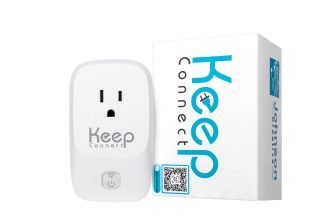
“Climate Pal by Keep Connect tracks indoor temperature in real time, so you know exactly how and when your AC is running — and can catch issues before they cost you. See it at johnson-creative.com.” More details can be found on the Climate Pal product page.
When to Call an HVAC Technician
Some AC problems can safely be checked by you. Some need a professional.
You can usually do these first:
- Change the air filter
- Check thermostat setting.
- Blocked Vents Open
- Clear debris from the outdoor unit
- Close blinds during the sun’s peak
- Monitor the temperature and humidity in the room
- Check if it’s just one room or the whole house
Contact an HVAC technician if you notice:
- AC blows hot air
- Refrigerant lines become frosted
- AC short cycles over and over
- The system does not reach temperature and runs continuously
- Tripping off Breaker
- Outdoor unit does not start
- You hear grinding or loud electrical noises
- There may be a refrigerant leak
- Low airflow
- The system is getting old, and performance is degrading
Don’t keep forcing an AC to run if something is obviously wrong. A little repair can turn into a bigger repair if the compressor, fan motor, or electrical components are stressed too long.
Monitoring will tell you when a pattern changes, but it doesn’t take the place of an HVAC inspection when the system shows serious warning signs.
Frequently Asked Questions
Normally, a central AC should run for about 15 to 20 minutes on each cooling cycle. On really hot days, cycles may take longer. If your AC runs all the time or clicks on and off every 5 to 10 minutes, it might need checking.
In extreme heat, this can be normal, but it is not ideal if it happens regularly. An air conditioner that runs all day could be too small, low on refrigerant, have a dirty filter, poor insulation, or airflow problems.
AC short cycling is when the air conditioner is turning on and off too quickly, often every 5 to 10 minutes. This could be caused by an oversized system, dirty filter, low refrigerant, frozen coil, thermostat problem, or electrical problem.
If your AC is reaching the thermostat setting, has normal cooling cycles, is removing humidity, blowing cool air, and keeping rooms comfortable, it is probably working fine. If rooms feel warm, humid, or uneven, or your bill suddenly rises, the system may not be working well.
Yes. Even if your thermostat is set to a comfortable temperature, high humidity can make your home feel warmer and sticky. If humidity remains high when the AC is on, the system may be short cycling, oversized, or not removing moisture effectively.
Climate Pal is not diagnostic to mechanical HVAC problems or a replacement for a technician. It tracks indoor temperature and humidity trends, so you can see if rooms are hitting target temperature, getting too humid, or changing in a way that could signal your AC needs help.