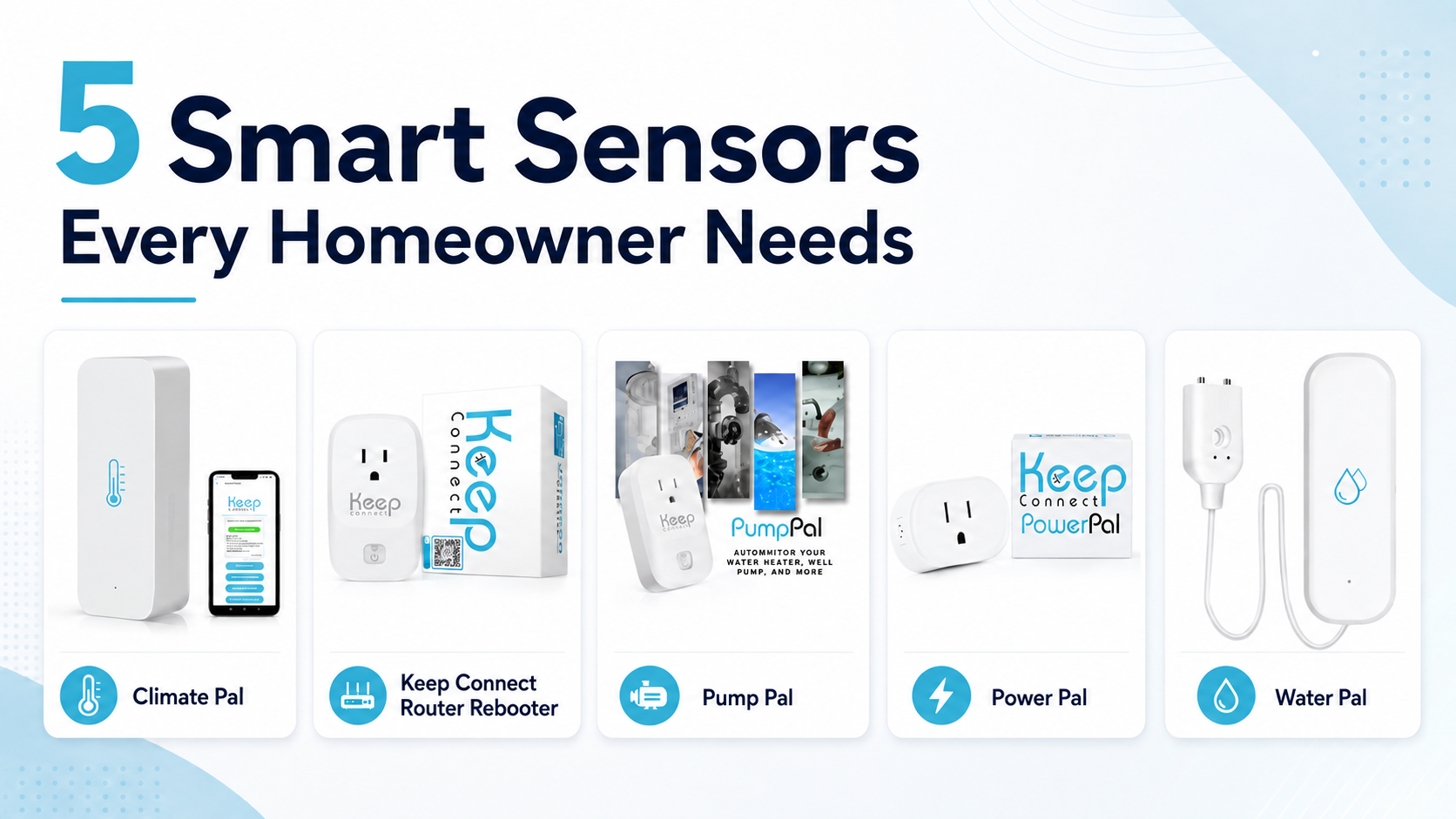
Your home has dozens of things that can go wrong while you are asleep, at work, or on vacation. A slow water leak can spread beneath flooring, a sump pump can stop working during a storm, a freezer can lose power, or your internet can drop when security devices need it most.
The right smart home sensors give you an early warning before a small problem becomes a costly emergency. Instead of discovering damage hours or days later, you receive an alert when conditions first change.
These five smart home monitoring devices cover some of the most common risks homeowners face: water leaks, basement flooding, extreme temperatures, power outages, and unreliable internet.
Why Smart Home Sensors Are Worth Every Penny
Most problems in the home do not become expensive because they can’t be fixed. They get expensive because no one sees them soon enough.
At first a leaking pipe might drip only a little water. A sump pump may fail before the worst of the rain arrives. Freezers stay cold for hours after a power outage, so it’s hard to tell if the food inside is in danger. A camera, thermostat or other connected device may depend on an internet connection that is lost.
Maintenance of the home is largely visual inspection. This approach works well if you are close to the problem but doesn’t do much to protect you if you are away.
Smart home sensors help to fill that gap, by continuously monitoring specific conditions. They can detect, depending on the device:
- Water contacting a probe
- Alterations in electrical activity
- Outside of a selected temperature range
- Humidity going up or down
- Power loss
- Internet connection lost
- Equipment that does not operate normally
And it’s not just about convenience. It’s time to respond.
An alert can be a chance to stop water, notify a neighbor, move items, turn on a backup system or call a professional before damage multiplies.
Smart home sensors can be particularly useful for:
- Homeowners who travel often
- vacation and rental property
- Basements – Finished
- Sump pump housing
- Houses with old plumbing
- Properties in areas of extreme temperatures
- Holiday homes and isolated cabins
- Homes with a freezer, fish tank or medical equipment
- Households reliant on a stable internet connection
The best home protection sensors are specialized for one risk and do it well. In conjunction they give a fuller picture of what is going on in the property.
Sensor #1 — Water Leak Detector (Water Pal)

Water leaks can spread out of sight. A loose washing-machine connection, failing water heater, or drip beneath a sink may cause damage before becoming visible.
Water Pal is a smart water leak sensor designed to detect water at its probe and provide an early warning. It is useful wherever an unnoticed leak could cause significant damage.
Where to place it
Place a water leak detector where water is likely to appear first. High-priority locations include:
- Beside a water heater
- Behind a washing machine
- Under kitchen, bathroom, or utility sinks
- Near a dishwasher or refrigerator supply line
- Close to plumbing manifolds and basement floor drains
- Near HVAC equipment or a dehumidifier
- Along a foundation wall with a history of seepage
- In a crawl space or near basement valuables
Install it at floor level where water is likely to travel. Avoid routine splashes, mopping, or condensation that could cause nuisance alerts.
Do not place the sensor where routine cleaning, harmless condensation or occasional splashes may cause nuisance alerts. Should be close enough to pick up a real leak but not respond to normal household activity.
Larger homes may require more than one sensor. A detector next to the water heater can’t detect a washing machine on the other side of the house.
How it protects you
A basic leak alarm may emit a loud sound when it senses water. That’s fine if you’ve got someone at home, but a connected device can give you even more peace of mind by sending you a remote alert.
Water Pal is designed to know when water touches the probe and alert you by SMS or email. That means you are capable of finding a leak while working, sleeping, traveling, or running another property.
When you get an alert you can:
- Inspect the damaged area.
- Turn off the water supply as required.
- Move things around you.
- Start to dry the area.
- Call a plumber or restoration professional.
- If you’ll be away, have a neighbor or property manager look in on things.
“The sooner those steps start, the easier it is to limit damage.”
Test all water leak detectors after installation. Wet the probe with a small amount of clean water, make sure the alert is set to go to the correct phone number or email address and dry the sensor completely.
Test periodically and whenever you change your WiFi network, router, or contact information.
Sensor #2 — Sump Pump Monitor (Pump Pal)

A sump pump works out of sight, and a malfunction may not become obvious until water is already rising.
Pump Pal is designed to monitor sump pump activity and notify the homeowner when behavior appears abnormal. It adds visibility to a system that many people otherwise check only occasionally.
Why basement flooding is preventable
Not every basement flood can be prevented, but many risks can be reduced through maintenance, testing, drainage improvements, backup planning, and earlier awareness.
Common problems include lost power, a blocked discharge line, or a pump that fails to activate. Inspect the pit, test the pump before severe weather, and keep the discharge route clear. High-risk homes should also consider an appropriate backup system.
A monitoring device can help you identify trends such as:
- Pump not running
- The pump is running more than it should
- Extremely long cycles
- Electrical behavior indicating a problem
- A change in system performance
Its greatest strength is being aware remotely. You get information about what the pump is doing, and can react when something looks wrong, instead of going down to check the sump pit every few hours during a storm.
For extra security, consider adding a floor-level water sensor to your sump pump monitor. The pump monitor watches the equipment’s operation and the leak detector tells you when water gets to somewhere it shouldn’t.
What Pump Pal detects
Pump Pal monitors sump pump activity and can help identify operating patterns that may need attention. Depending on the current model and configuration, this may include a pump that is not operating as expected or activity that differs from its normal pattern. Confirm the exact detection and notification features in the current Pump Pal documentation before installation.
Install the monitor in a dry location and follow the manufacturer’s setup instructions. Test the complete system before storm season rather than waiting for an emergency.
For more complete basement protection, pair equipment monitoring with Water Pal at floor level. Pump Pal watches the pump’s activity, while Water Pal provides a separate warning if water reaches an area where it should not be.
Sensor #3 — Temperature & Humidity Sensor (Climate Pal)

Temperature and humidity affect far more than comfort. Extreme heat or cold can threaten plumbing, plants, electronics, food, and stored materials. Excessive humidity can contribute to condensation, corrosion, and conditions that support mold growth.
Climate Pal is a temperature and humidity sensor that haelps homeowners track environmental conditions remotely. Custom alerts provide an early warning when readings move outside the selected ranges.
Best use cases (greenhouses, vacation rentals, server rooms)
Greenhouses: Plants can react quickly to a failed heater, stuck vent, cold night, or unusually hot afternoon. Temperature and humidity alerts give the owner time to check ventilation, heating, cooling, or watering systems.
Vacation rentals and second homes: A vacant property may experience a failed furnace, excessive humidity, or cooling problems without any obvious warning. Remote monitoring helps owners and property managers check conditions between visits.
Server rooms and network closets: Electronics generate heat and can become unreliable when ventilation or cooling fails. A rising-temperature alert can prompt an inspection before equipment overheats.
Choose thresholds that suit the space. A greenhouse, basement, and server room should not automatically use the same limits. After setup, test the alerts and verify that Climate Pal has reliable Wi-Fi coverage in its final location.
Sensor #4 — Power Outage Monitor (PowerPal)

When you are home, a power outage is obvious. When a property is empty, even a prolonged loss of electricity can go unnoticed.
PowerPal monitors power availability and can notify homeowners when electricity is lost and restored—especially useful at remote or vacant properties.
Who needs this most
Power monitoring is particularly valuable for:
- Homeowners who travel frequently
- Vacation homes, cabins, and rental properties
- Homes in storm-prone areas
- Properties that depend on an electrically powered sump pump
- Households with refrigerated food or medication
- Aquarium owners
- Remote offices and equipment rooms
An alert can prompt you to check the utility provider, contact someone nearby, or activate an established backup plan.
What happens during an outage (freezers, medical equipment, fish tanks)
Freezers and refrigerators: Cold appliances do not warm immediately, but safe holding time depends on factors such as how full they are, room temperature, and how often the door is opened. An early alert helps you decide whether backup power or alternative storage is needed.
Medical equipment: Households that rely on powered medical devices, refrigerated medication, or climate control need a documented emergency plan. That may include approved backup power and clear response procedures. PowerPal can provide an additional warning, but it does not replace medical-grade backup systems or professional guidance.
Fish tanks: Pumps, filters, heaters, and aeration equipment may stop during an outage. Prompt notification gives the owner more time to implement a suitable backup solution.
Power loss can also disable a primary sump pump during heavy rain. Combining PowerPal, Pump Pal, and Water Pal creates three complementary layers: outage awareness, pump-activity monitoring, and water detection.
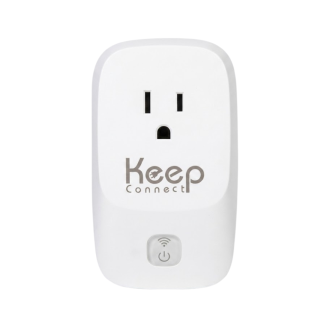
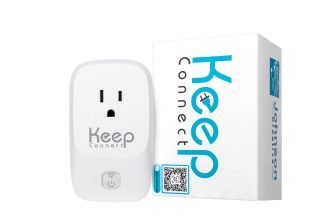
Sensor #5 — Internet Reliability Device (Keep Connect)

Internet service now supports security cameras, smart locks, thermostats, home offices, and other home automation sensors. When the connection fails, you may lose both convenience and visibility into a remote property.
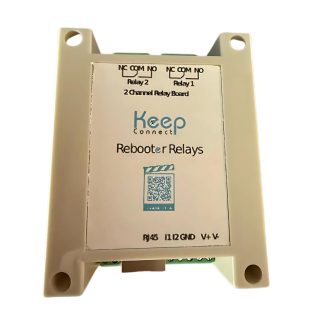
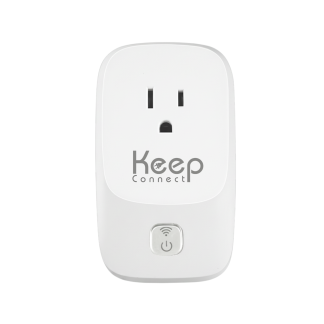
Keep Connect is an automatic router rebooter. It checks internet health and, after detecting a connection failure according to its configuration, can power-cycle the attached router or modem to help restore service. This eliminates many situations in which someone would otherwise have to visit the property simply to unplug network equipment and plug it back in.
Why internet drops are more costly than people think
An unreliable connection can take cameras, doorbells, locks, thermostats, and connected monitors offline. It can also interrupt remote work, obscure conditions at a second property, and require an unnecessary service visit just to restart network equipment.
Keep Connect also supports the broader monitoring system. A cloud-connected device may be unable to deliver a remote notification while the home network is unavailable. Automatically restoring the router or modem can help connected devices return online when internet service is available again.
Connect the correct network equipment, follow the current setup guide, and test the recovery process after installation. Advanced cloud monitoring and app features may require a separate service, so review the current plan details when selecting a model.
The Complete Home Protection Bundle
Each of these devices protects against a different problem:
| Smart sensor | Primary risk monitored | Best locations |
|---|---|---|
| Water Pal | Leaks and unwanted water | Water heater, washer, basement, crawl space |
| Pump Pal | Sump pump activity and failure warning | Sump pump system |
| Climate Pal | Temperature and humidity changes | Greenhouse, basement, rental, server room |
| PowerPal | Power loss and electrical interruptions | Freezer, utility area, remote property |
| Keep Connect | Internet failure and router recovery | Router and modem location |
Together, these devices give you a clearer picture of what is happening around your home. During a severe storm, PowerPal can alert you to a power outage, Pump Pal can monitor sump pump activity, and Water Pal can detect unwanted water. Climate Pal tracks temperature and humidity, while Keep Connect helps restore your network when internet service is available again.
Start by considering your home’s biggest risks. Look for places where leaks could go unnoticed, equipment that needs to stay powered, rooms affected by temperature or humidity, and devices that rely on the internet.
Give each device a clear name, such as “Basement Water Heater,” “Main Sump Pump,” or “Garage Freezer Power.” Clear labels make alerts easier to understand and help you respond quickly.
Explore the Keep Connect product range and choose the devices that best match your home’s protection needs.
FAQ
Yes. Each device monitors a different risk, so they can provide complementary layers of protection. Water Pal monitors water, Pump Pal watches sump pump activity, Climate Pal tracks environmental conditions, PowerPal monitors power availability, and Keep Connect supports internet reliability. Check each model’s setup requirements before building a multi-device system.
App and cloud-service support can vary by product and model. Some devices can be configured through a browser, while optional cloud features may be available through the Keep Connect Cloud Services website or app. Check the current documentation if managing every device through one interface is important to you.
The cost depends on the devices and number of areas you need to monitor. A large property may need several water or climate sensors, while another may need only one of each type. Because prices, bundles, and service fees can change, check the current product pages for an accurate total.
Connected smart home sensors can provide remote notifications when properly configured and connected to the required network or service. Available notification methods vary by product. Test each device before traveling and make sure the correct person receives its alerts.
Local detection may continue on supported devices, but remote cloud notifications generally require connectivity. Keep Connect can help restore service by power-cycling attached network equipment when it detects an internet failure. Confirm offline behavior in each product’s current documentation.
The right number depends on your layout and risks. Begin with high-priority areas such as water heaters, laundry rooms, sump pits, freezers, and remote spaces. Larger or multi-level homes may require multiple water or climate sensors for useful coverage.
Home emergencies cannot always be prevented, but they do not have to remain invisible. With the right smart home sensors, a tested response plan, and routine maintenance, you can identify problems sooner and protect what matters—even when you are miles away.